The scent of roasting citrus and rhubarb filled my kitchen that Sunday afternoon, catching me off guard in the best way. I was actually aiming for a simple dessert—nothing fancy—just something quick to use up a stubborn bag of polenta and a couple of blood oranges sitting on my counter. Honestly, the idea of an upside-down cake felt a bit old-fashioned at first, but there I was, chopping rhubarb and peeling those vibrant oranges, curiosity nudging me forward.
Halfway through, I wasn’t sure if the flavors would really come together. Rhubarb’s tartness with blood orange’s bittersweet punch? And polenta as the base—would it be gritty or too dense? But when the timer finally rang and I flipped the cake out of the pan, the glossy ruby topping glistening, I knew I’d stumbled onto something special. It was a surprising win that kept me making this Perfect Rhubarb and Blood Orange Upside-Down Polenta Cake multiple times that week—each bite balancing sweet and tart, moist and crumbly.
That unexpected afternoon taught me something simple: sometimes the best recipes come from a little experimentation and a pinch of patience. This cake isn’t just dessert; it’s a moment of calm and joy that I come back to when I want something bright yet comforting. And, honestly, it’s a recipe I trust to impress, whether for a casual tea or a last-minute gathering.
Why You’ll Love This Recipe
This recipe has quickly become a favorite not just because it tastes incredible, but because it works. After testing it in my kitchen several times, here’s why I keep coming back to this Perfect Rhubarb and Blood Orange Upside-Down Polenta Cake:
- Quick & Easy: Ready in about an hour, including baking, which makes it great for last-minute dessert needs or weekend treats.
- Simple Ingredients: No hard-to-find items here. Polenta, fresh rhubarb, blood oranges, a handful of pantry staples—nothing fancy, just honest flavor.
- Perfect for Spring and Summer: The tart rhubarb paired with bright blood orange really sings during those warmer months when you want something fresh but a little decadent.
- Crowd-Pleaser: Every time I’ve brought this to brunch or dinner, it’s vanished quickly. Kids and adults alike love the balance of textures and flavors.
- Unbelievably Delicious: The polenta gives the cake a tender crumb with a slight grain that’s so satisfying. Couple that with the caramelized fruit topping, and you get a perfect bite every time.
What sets this cake apart is the way the polenta batter contrasts with the glossy, tart fruit layer. It’s not your typical flour-based upside-down cake, and the blood oranges add a subtle complexity that plain oranges just can’t match. This isn’t just another dessert—it’s a recipe that invites a second helping before you even realize it.
If you enjoy dishes with a twist, you might also appreciate the ease and flavor-packed punch of five-dollar chicken fried rice or the creamy comfort of one-pot chicken Alfredo with broccoli. Both share that same kitchen-friendly spirit—simple, satisfying, and totally doable.
What Ingredients You Will Need
This recipe relies on simple, wholesome ingredients that come together to create a bold flavor and satisfying texture without fuss. Most are pantry staples or easy to find at your local market during rhubarb season.
- For the topping:
- Fresh rhubarb stalks, sliced into 1-inch pieces (look for firm, bright stalks for the best tartness)
- Blood oranges, thinly sliced with peel on (adds a bittersweet complexity)
- Granulated sugar (to help caramelize the fruit)
- Unsalted butter, melted (for richness and helping the topping caramelize)
- For the cake batter:
- Fine cornmeal (polenta) – I recommend Bob’s Red Mill for its consistent texture
- All-purpose flour (for structure and tenderness)
- Baking powder (to give a nice lift)
- Salt (to balance flavors)
- Granulated sugar and light brown sugar (for moisture and a slight molasses hint)
- Large eggs, room temperature (helps with batter rise and texture)
- Whole milk or buttermilk (buttermilk gives a subtle tang, but regular milk works fine)
- Unsalted butter, melted and cooled (adds moistness and richness)
- Vanilla extract (for depth of flavor)
Substitutions are pretty flexible here: you can swap almond flour for all-purpose flour to make this gluten-free, and coconut or oat milk for dairy-free versions. Just keep in mind the texture may shift slightly. If you want a sweeter cake, feel free to bump the sugar up a bit, but I like it balanced so the fruit shines.
Equipment Needed
- 9-inch (23 cm) round cake pan or a similarly sized cast-iron skillet (the latter adds a beautiful crust but isn’t essential)
- Mixing bowls (one large for batter, one for fruit prep)
- Whisk and spatula (for mixing and folding the batter)
- Measuring cups and spoons (precision helps with baking success)
- Cooling rack (to cool the cake after baking)
- Oven mitts (standard but important!)
If you don’t have a cast-iron skillet, a heavy, oven-safe pan or even a springform pan works well for flipping the cake out without breaking it. I’ve tried silicone cake pans, but the caramel topping can be tricky to release cleanly. For budget-friendly options, a regular cake pan lined with parchment can get the job done.
Preparation Method
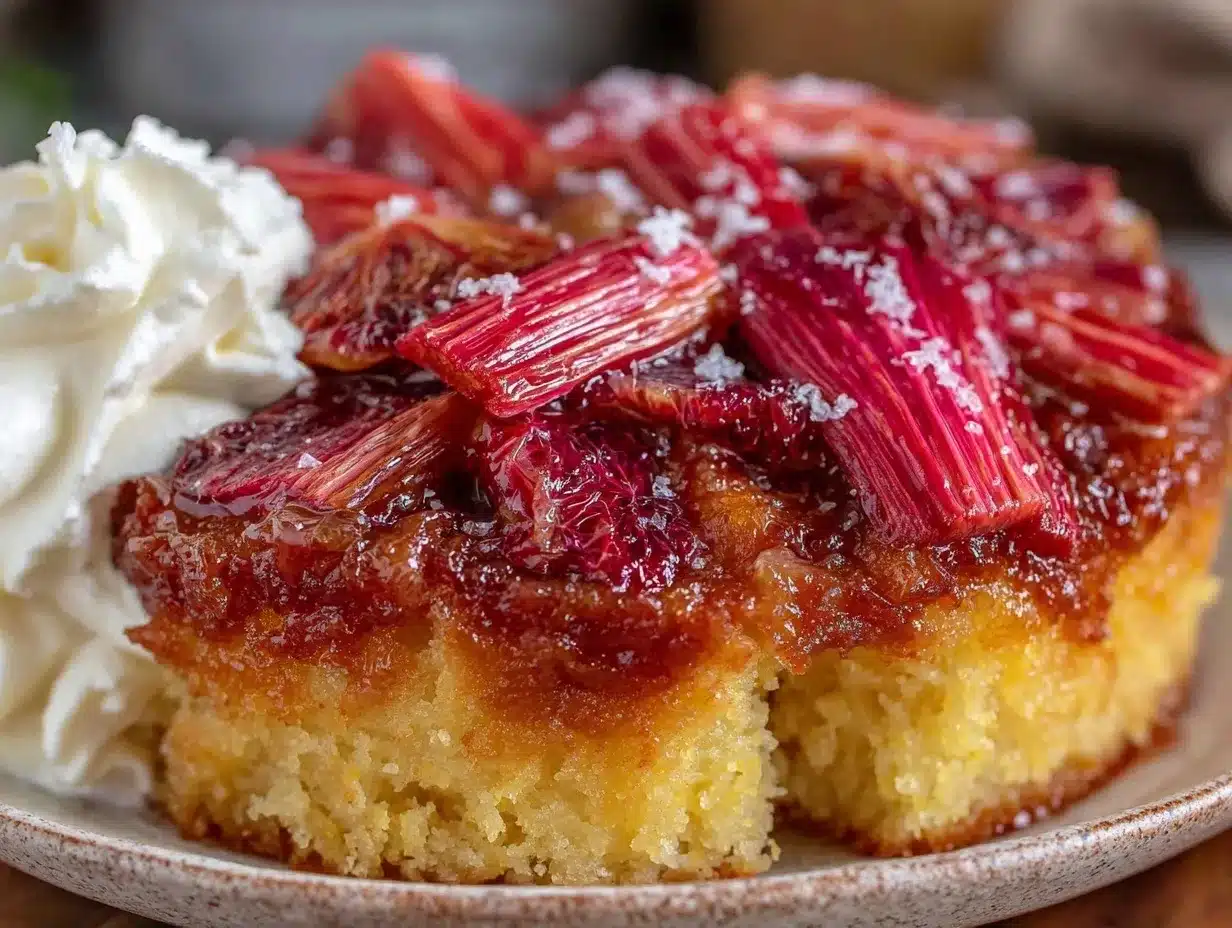
- Prepare the fruit topping (10 minutes): Preheat your oven to 350°F (175°C). In your cake pan or skillet, melt 4 tablespoons (60 g) of unsalted butter over low heat. Sprinkle ½ cup (100 g) of granulated sugar evenly over the melted butter. Arrange the rhubarb pieces and blood orange slices in a decorative pattern on top of the butter and sugar mixture. The fruit will caramelize and create that stunning upside-down effect.
- Mix dry ingredients (5 minutes): In a large bowl, whisk together 1 cup (170 g) of fine cornmeal, ¾ cup (95 g) all-purpose flour, 1 ½ teaspoons baking powder, and ¼ teaspoon salt. This blend ensures a tender crumb with just the right texture.
- Combine sugars and wet ingredients (5 minutes): In a separate bowl, beat ½ cup (100 g) granulated sugar and ¼ cup (50 g) light brown sugar with 2 large eggs until pale and slightly fluffy. Add ⅓ cup (80 ml) whole milk or buttermilk, ⅓ cup (75 g) melted unsalted butter (cooled), and 1 teaspoon vanilla extract. Mix until combined but don’t overbeat.
- Combine wet and dry (2 minutes): Slowly fold the dry ingredients into the wet mixture using a spatula until just combined. The batter will be thick but pourable—if it feels too stiff, add a tablespoon of milk.
- Pour batter over fruit (1 minute): Evenly spread the batter over the arranged fruit in the pan, smoothing the top gently.
- Bake (40-45 minutes): Place the pan in the preheated oven and bake for 40 to 45 minutes. The cake is done when a toothpick inserted into the center comes out clean, and the edges pull slightly away from the pan. The fruit topping should be bubbling and golden.
- Cool and invert (15 minutes): Allow the cake to cool in the pan on a wire rack for about 15 minutes. Run a knife gently around the edges to loosen, then carefully place a serving plate over the pan and flip quickly but carefully. The fruit topping should glisten beautifully atop the polenta cake.
Watch for common trouble spots: polenta cakes can sometimes be grainy if the cornmeal is too coarse, so fine cornmeal is key here. Also, don’t skip the cooling step before flipping—it helps avoid a sticky mess. If the fruit sticks a little, a gentle tap with a spatula usually frees it.
Cooking Tips & Techniques
Here’s what I’ve learned from making this cake a few too many times:
- Choosing the right polenta: Fine or medium-ground cornmeal works best. Coarse polenta can make the cake crumbly and dry. I stick to Bob’s Red Mill for reliable texture.
- Balancing tartness: Rhubarb can get pretty sour, so don’t skimp on the sugar in the topping. The blood orange slices help mellow the tartness, but if your fruit is extra tangy, adding a sprinkle of brown sugar on top before baking smooths things out.
- Don’t overmix: When combining wet and dry ingredients, fold gently to prevent a dense cake. Overmixing develops gluten in the flour, which you want to avoid.
- Timing: Keep an eye on the cake after 40 minutes. Ovens vary, and you want the edges golden without drying out the center.
- Multitasking: While the cake bakes, you can prep a simple whipped cream or even a quick citrus glaze to drizzle on top for some extra flair.
Variations & Adaptations
This cake is super versatile, and I’ve tried a bunch of versions depending on the season and what’s in the pantry:
- Seasonal fruit swaps: In summer, fresh strawberries or peaches work beautifully instead of rhubarb. For winter, try using blood oranges with pomegranate seeds for a festive twist.
- Gluten-free option: Swap all-purpose flour for almond flour or a gluten-free baking blend. The texture will be a little different but still moist and delicious.
- Vegan adaptation: Use flax eggs (1 tablespoon ground flaxseed + 3 tablespoons water per egg) and coconut milk instead of dairy. Use vegan butter or coconut oil for the topping and batter. The flavor will shift slightly but stays delicious.
- Extra crunch: Sprinkle chopped pistachios or sliced almonds on top of the fruit before baking for a nutty contrast.
- Citrus twists: Swap blood oranges for Cara Cara oranges or grapefruit for a different citrus note.
One of my favorite personal tweaks was adding a teaspoon of cardamom to the batter for a warm spice note that paired surprisingly well with the tart fruit. It’s worth trying if you like a little exotic flavor without overpowering the main ingredients.
Serving & Storage Suggestions
This cake shines best served slightly warm or at room temperature. The fruit topping is luscious and sticky fresh out of the oven but mellows into a tender, jammy layer as it cools.
Try serving it with a dollop of lightly sweetened whipped cream or a scoop of vanilla bean ice cream for extra indulgence. It also pairs wonderfully with a cup of Earl Grey tea or a bright, citrusy white wine if you’re feeling fancy.
Store leftovers in an airtight container in the refrigerator for up to 3 days. To reheat, pop individual slices in the microwave for 15–20 seconds or warm the whole cake in a 300°F (150°C) oven for 10 minutes, covered loosely with foil to keep moisture in.
Flavors tend to deepen after a day, so if you can wait, it’s often even better the next day! Just be sure to keep the cake covered to avoid drying out.
Nutritional Information & Benefits
This cake offers a nice balance between indulgence and wholesome ingredients. Here’s a rough estimate per serving (based on 8 slices):
| Calories | 280 |
|---|---|
| Fat | 12 g |
| Carbohydrates | 38 g |
| Protein | 4 g |
| Fiber | 3 g |
Rhubarb is a good source of vitamin K and fiber, while blood oranges add vitamin C and antioxidants. Using polenta provides a gluten-free grain base rich in iron and magnesium. This recipe is naturally gluten-free if you swap the all-purpose flour for a gluten-free alternative.
It’s definitely a treat but one that brings some nutritional value and seasonal produce into the mix. I like it as a dessert that feels a little lighter than typical cakes, especially when paired with fresh fruit toppings and minimal added sugar.
Conclusion
Making this Perfect Rhubarb and Blood Orange Upside-Down Polenta Cake has become one of those kitchen rituals I look forward to, especially when spring is in full swing and rhubarb shows up at the market. It’s a cake that surprises you with its balance of textures and flavors—something that’s just as lovely for a quiet afternoon treat as it is for sharing with friends.
Feel free to tweak the fruit or spices to suit your mood or what’s on hand. I love how this recipe invites creativity while still being reliably delicious every time. If you’ve been searching for a homemade dessert with a fresh twist and a little rustic charm, this one’s worth trying.
And hey, if you enjoy this kind of recipe, you might appreciate some other favorites from the kitchen like the creamy baked feta pasta recipe with cherry tomatoes and basil or the spicy vodka rigatoni with creamy burrata—both have that same simple-yet-special vibe that makes weeknight dinners a joy.
Give it a go, and I’d love to hear how you make it your own!
FAQs
Can I use regular oranges instead of blood oranges?
Absolutely. Regular navel or Valencia oranges will work fine, though blood oranges add a unique color and subtle bitterness that’s hard to replicate.
Is it necessary to use polenta, or can I use all flour?
Polenta gives this cake its signature texture and slight graininess that pairs beautifully with the fruit topping. You can make it all flour-based, but the texture and flavor will change quite a bit.
How do I store leftovers to keep the topping from getting soggy?
Store the cake in an airtight container in the fridge. Reheat gently in the oven to restore some texture, and avoid covering it while warm to keep the topping from steaming.
Can I make this cake ahead of time?
Yes! It actually tastes better the next day once the flavors meld. Just cool and store in the refrigerator, then warm before serving.
What’s the best way to slice and serve this cake?
Use a sharp, serrated knife to slice gently through the fruit topping without squishing it. Serving with a spatula helps keep the slices intact.
Pin This Recipe!
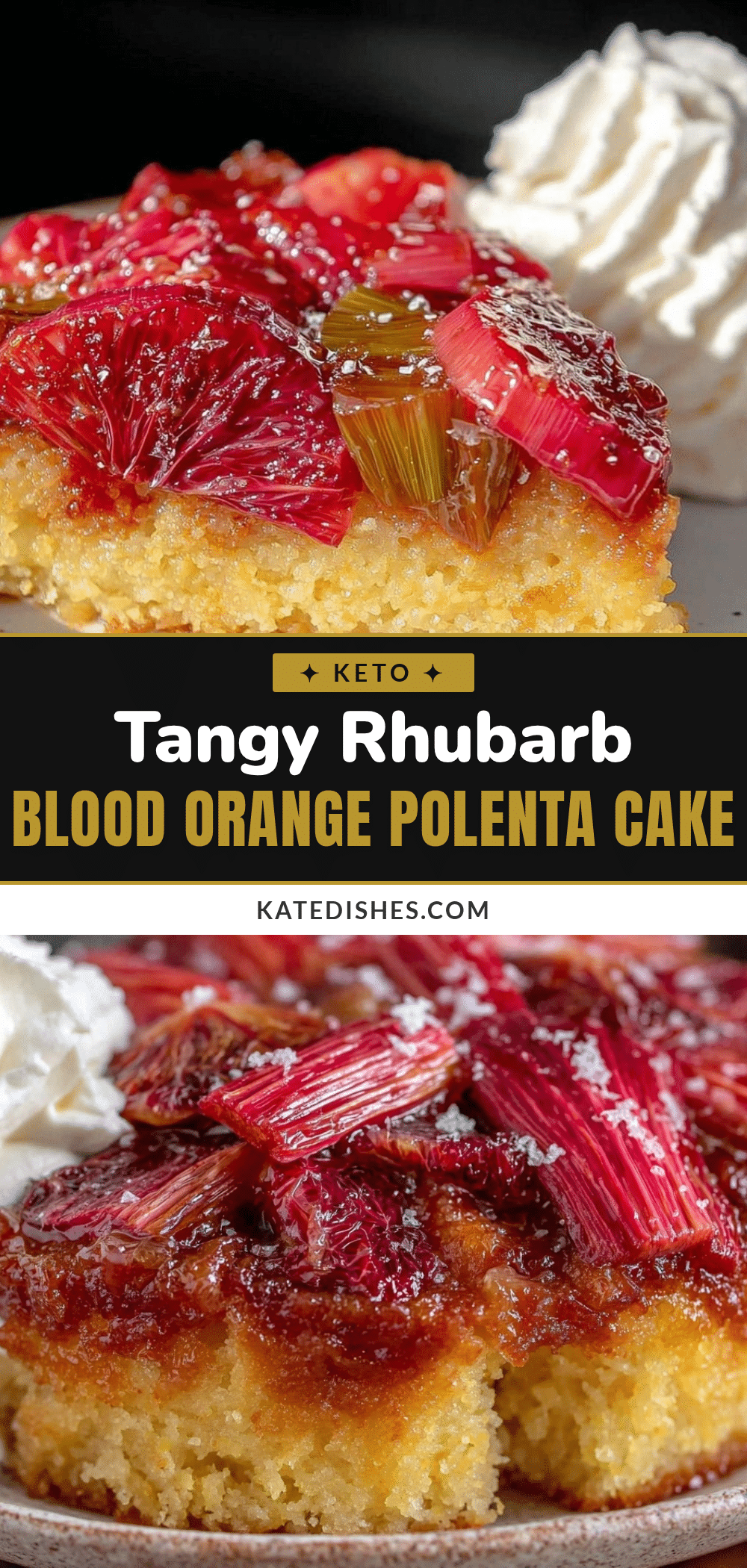
Perfect Rhubarb and Blood Orange Upside-Down Polenta Cake
A quick and easy upside-down cake featuring tart rhubarb and bittersweet blood oranges atop a tender polenta base, perfect for spring and summer desserts.
- Prep Time: 23 minutes
- Cook Time: 45 minutes
- Total Time: 1 hour 8 minutes
- Yield: 8 servings 1x
- Category: Dessert
- Cuisine: American
Ingredients
- 4 tablespoons unsalted butter, melted (for topping)
- 1/2 cup granulated sugar (for topping)
- Fresh rhubarb stalks, sliced into 1-inch pieces
- Blood oranges, thinly sliced with peel on
- 1 cup fine cornmeal (polenta)
- 3/4 cup all-purpose flour
- 1 1/2 teaspoons baking powder
- 1/4 teaspoon salt
- 1/2 cup granulated sugar
- 1/4 cup light brown sugar
- 2 large eggs, room temperature
- 1/3 cup whole milk or buttermilk
- 1/3 cup unsalted butter, melted and cooled
- 1 teaspoon vanilla extract
Instructions
- Preheat oven to 350°F (175°C). In a 9-inch round cake pan or cast-iron skillet, melt 4 tablespoons unsalted butter over low heat.
- Sprinkle 1/2 cup granulated sugar evenly over the melted butter.
- Arrange rhubarb pieces and blood orange slices decoratively on top of the butter and sugar mixture.
- In a large bowl, whisk together 1 cup fine cornmeal, 3/4 cup all-purpose flour, 1 1/2 teaspoons baking powder, and 1/4 teaspoon salt.
- In a separate bowl, beat 1/2 cup granulated sugar and 1/4 cup light brown sugar with 2 large eggs until pale and fluffy.
- Add 1/3 cup milk or buttermilk, 1/3 cup melted and cooled unsalted butter, and 1 teaspoon vanilla extract to the eggs and sugar mixture; mix until combined.
- Slowly fold the dry ingredients into the wet mixture until just combined; if batter is too stiff, add 1 tablespoon milk.
- Pour batter evenly over the arranged fruit in the pan, smoothing the top gently.
- Bake for 40 to 45 minutes until a toothpick inserted in the center comes out clean and edges pull slightly away from the pan.
- Cool the cake in the pan on a wire rack for 15 minutes.
- Run a knife around the edges to loosen, then invert the cake onto a serving plate carefully.
- Serve slightly warm or at room temperature.
Notes
Use fine or medium-ground cornmeal for best texture. Do not overmix batter to avoid dense cake. Cool cake before inverting to prevent sticking. For gluten-free, substitute almond flour for all-purpose flour. For vegan, use flax eggs and coconut milk with vegan butter or coconut oil.
Nutrition
- Serving Size: 1 slice (1/8 of cake
- Calories: 280
- Fat: 12
- Carbohydrates: 38
- Fiber: 3
- Protein: 4
Keywords: rhubarb cake, blood orange dessert, upside-down cake, polenta cake, spring dessert, summer dessert, gluten-free option, easy dessert