“Can you believe this turkey came out of my oven looking like a restaurant masterpiece?” That’s what my neighbor said last Thanksgiving as she eyed my Perfect Dry-Brined Herb Butter Spatchcock Turkey with Crispy Skin. Honestly, I wasn’t always sold on spatchcocking a turkey. It felt like a lot of extra work, and I was a little skeptical about how much difference it would really make. But after a chaotic morning juggling last-minute grocery runs and a kitchen that looked like a tornado hit it, I needed a game changer for dinner.
So, I grabbed the turkey, grabbed my herbs, and went for the dry brine—something I’d read about but never dared try. The butter, oh the butter, was infused with garlic, thyme, and rosemary, slathered under the skin with reckless abandon. As the turkey roasted flat on the pan, the kitchen filled with this incredible aroma that was equal parts comforting and fancy.
The skin? Ridiculously crispy. The meat? Juicy beyond reason. What surprised me most was how this method cut the cooking time in half without sacrificing a lick of flavor. That first bite was silence—just pure satisfaction. It stuck with me because it turned a stressful day into a moment worth savoring. No fuss, just a turkey that looked and tasted like it deserved a spot at any holiday table or special occasion.
Now, whenever I’m craving that perfect roast, I reach for this recipe. It’s the kind of dish that feels like a quiet celebration, a little ritual that brings a calm confidence to the kitchen. And yes, people keep asking for the recipe. It’s earned its place in my cooking rotation for good reason.
Why You’ll Love This Recipe
After testing countless turkey recipes (and believe me, I’ve been around the block with dry brines and roasting tricks), this dry-brined herb butter spatchcock turkey stands out for some very good reasons:
- Quick & Easy: The spatchcock method reduces roasting time by almost 30-40%, so you’re looking at about 1.5 to 2 hours instead of the usual 3-4. If you dread the long wait, this one’s a winner.
- Simple Ingredients: No hunting for weird spices or specialty butters here. You probably have fresh herbs, garlic, and butter in your fridge already—just a few pantry staples and you’re set.
- Perfect for Holidays & Gatherings: Whether it’s Thanksgiving, a cozy winter dinner, or a Sunday feast, this turkey impresses without stress.
- Crowd-Pleaser: The crispy skin paired with juicy meat is a combo that gets raves from kids and adults alike. Trust me, leftovers disappear fast.
- Unbelievably Delicious: Slathering herb butter under the skin isn’t just for show—it seeps into every bite, creating a tender, flavorful experience that’s hard to beat.
What really sets this turkey apart is the dry brining step. It’s a simple technique that guarantees moisture retention and seasoning deep into the meat. Plus, spatchcocking means even cooking and that coveted crispy skin all around. Honestly, it’s like the best parts of roasting and frying had a delicious baby.
For those who love multitasking in the kitchen, this method frees up time to focus on side dishes or desserts. If you’re curious about pairing this turkey with something indulgent yet simple, you might enjoy the creamy one-pot chicken alfredo with broccoli—comfort food that’s just as fuss-free.
What Ingredients You Will Need
This recipe leans on straightforward, wholesome ingredients that build layers of flavor without complicated steps. Here’s what you’ll need to get that perfect dry-brined herb butter spatchcock turkey:
- For the Turkey:
- Whole turkey (12-14 pounds / 5.4-6.4 kg), spatchcocked (backbone removed, flattened)
- Coarse kosher salt (for dry brining; about 1 tablespoon per 5 pounds)
- Freshly ground black pepper
- Herb Butter:
- Unsalted butter (1/2 cup / 115 g), softened (room temperature for easy spreading)
- Fresh rosemary (1 tablespoon), finely chopped
- Fresh thyme leaves (1 tablespoon), finely chopped
- Fresh sage (1 tablespoon), finely chopped
- Garlic (4 cloves), minced
- Lemon zest (1 teaspoon), finely grated
- Fresh parsley (2 tablespoons), chopped (optional, adds fresh brightness)
- Ground white pepper (optional, for a milder pepper flavor)
- For the Roasting Pan:
- Vegetables for roasting bed (optional): carrots, celery, onions, roughly chopped (adds flavor to drippings)
I usually recommend using a high-quality unsalted butter like Plugrá or Kerrygold for that rich creaminess that melts perfectly under the skin. When choosing your turkey, look for fresh or thawed birds with firm skin—that helps with crispiness. If you can’t find fresh herbs, dried can work in a pinch but reduce quantities by half.
For those who want a little twist, swapping lemon zest for orange zest gives a subtle fruity note. And if you’re gluten-free or low-carb, keep an eye on the sides and gravies you pair with this bird—this turkey itself is naturally free of gluten and carbs!
Equipment Needed
- Sharp kitchen shears or a boning knife: Essential for spatchcocking your turkey by removing the backbone.
- Roasting pan or rimmed baking sheet: A sturdy pan large enough to hold the flattened turkey comfortably. A rimmed pan helps catch drippings.
- Wire rack: Placed inside the roasting pan to elevate the turkey for even heat circulation and crisp skin.
- Instant-read meat thermometer: Crucial for monitoring doneness without cutting into the bird and letting juices escape.
- Mixing bowl and small spatula or spoon: For mixing and spreading the herb butter under the skin.
- Plastic wrap or large tray: For dry brining the turkey in the fridge without mess.
If you don’t have shears, a very sharp chef’s knife works but requires more care and patience. For the roasting pan, a simple rimmed baking sheet lined with a wire rack can substitute if you don’t own a classic roasting pan. I prefer wire racks with legs to keep the turkey off the pan surface—that’s key for that crispy skin all around.
Maintaining your meat thermometer by calibrating it occasionally or checking its accuracy in boiling water can save you from guesswork. I’ve learned the hard way that relying on oven timers alone can lead to dry turkey, so this tool is non-negotiable.
Preparation Method
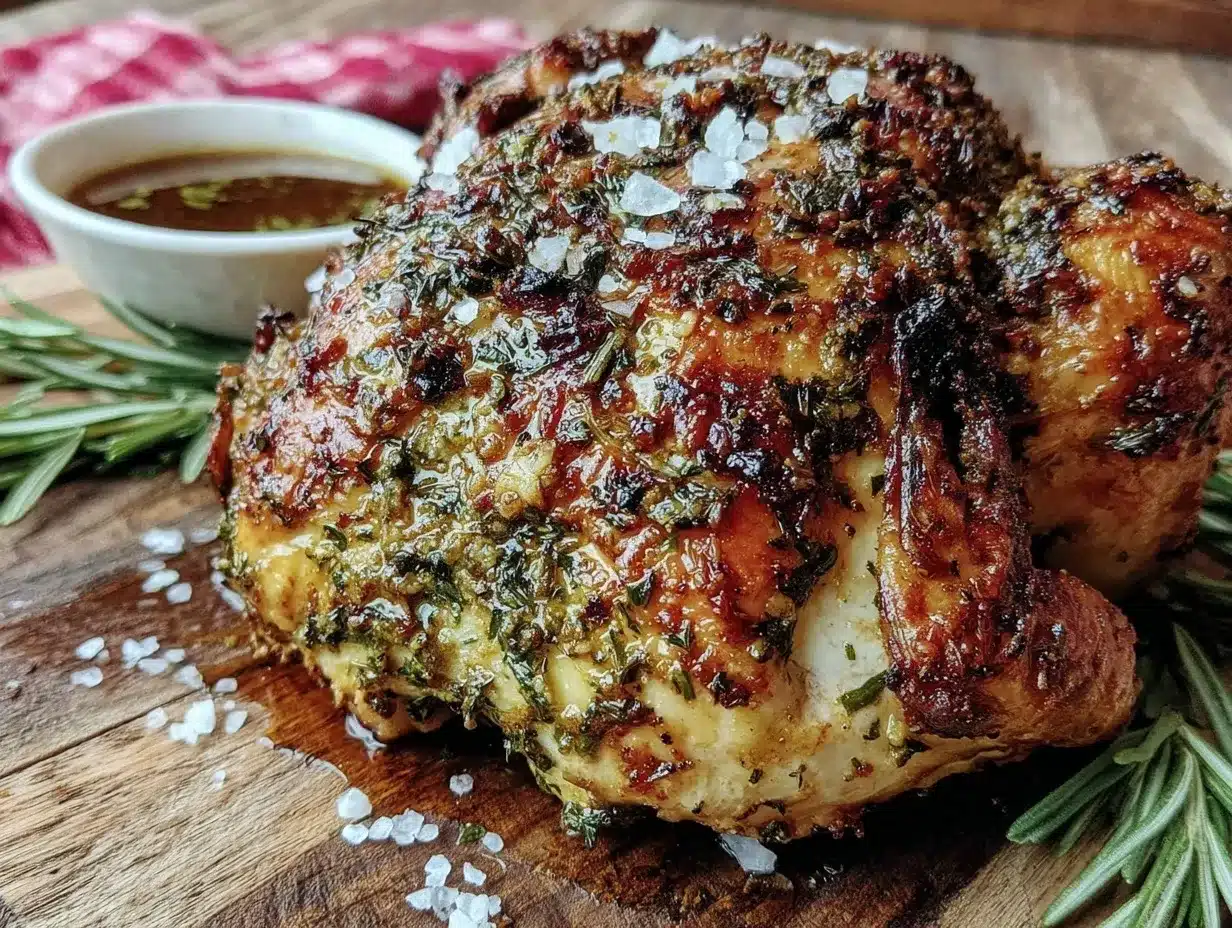
- Dry Brine the Turkey (24-48 hours ahead): Pat the spatchcocked turkey dry with paper towels. Sprinkle kosher salt evenly all over the skin and under the skin where possible. Use about 1 tablespoon per 5 pounds (approx. 5 g per kg). Don’t forget the cavity and underside. Place the turkey on a wire rack set over a rimmed baking sheet or tray, then refrigerate uncovered or loosely covered with plastic wrap for 24 to 48 hours. This step draws out moisture and allows the salt to penetrate deeply.
- Make the Herb Butter: In a medium bowl, combine softened butter, chopped rosemary, thyme, sage, minced garlic, lemon zest, parsley, and white pepper if using. Mix thoroughly until the herbs are evenly distributed.
- Prepare the Turkey for Roasting: Remove the turkey from the fridge about 30 minutes before roasting to come closer to room temperature. Gently loosen the skin from the breast and thighs using your fingers, being careful not to tear it. Spread about two-thirds of the herb butter evenly under the skin, concentrating on the breast and thighs. Use the remaining butter to rub all over the outside skin.
- Preheat Oven and Arrange Turkey: Preheat your oven to 450°F (230°C). Place chopped vegetables in the roasting pan if using, then set the wire rack on top. Position the turkey, skin-side up, on the rack, making sure it’s flat and the legs are splayed out for even cooking.
- Roast the Turkey: Roast at 450°F (230°C) for the first 30 minutes to jump-start browning. Then reduce the temperature to 350°F (175°C) and continue roasting for another 45 to 60 minutes. Total cooking time will depend on size but expect roughly 12-15 minutes per pound (about 26-33 minutes per kg). Start checking internal temperature at around 1 hour and 15 minutes.
- Check for Doneness: Insert an instant-read thermometer into the thickest part of the breast and thigh, avoiding bone. The safe internal temp is 165°F (74°C). Once reached, remove the turkey from the oven.
- Rest the Turkey: Tent the bird loosely with foil and let it rest for 20-30 minutes. This allows juices to redistribute, making the meat juicy and tender.
- Carve and Serve: Using a sharp knife, carve the turkey by slicing between the breast and leg joints. Serve warm with your favorite sides.
If your skin isn’t as crispy as you’d like, a quick broil for 2-3 minutes at the end can help—but watch carefully to avoid burning. And don’t skip the resting step; carving too soon often leads to dry meat.
Cooking Tips & Techniques
Here’s what I’ve learned from trial, error, and plenty of turkey roasting adventures:
- Spatchcocking saves time and promotes even cooking: Flattening the turkey ensures the entire bird cooks uniformly, so no dry edges and no undercooked pockets.
- Dry brining is non-negotiable for moisture: Skip it and you’ll risk drier meat. The salt subtly seasons the meat and breaks down proteins for juiciness.
- Butter under the skin is flavor gold: It melts into the meat, keeping it moist while building a fragrant herb crust.
- Starting at high heat helps crisp the skin: That 450°F blast at the beginning renders fat and crisps the skin quickly before lowering the temperature to cook through.
- Use a thermometer, not guesswork: Every oven’s different. I’ve burned many a bird by relying on time alone.
- Don’t overcrowd the pan: If you add veggies underneath, give them space to roast instead of steam.
One rookie mistake I made was peeling off too much skin while spreading butter—gentle hands are key. Also, I keep a spray bottle handy to mist the bird with water or broth if the skin looks dry mid-roast. It helps maintain crispness without drying out the meat.
Variations & Adaptations
This recipe is super adaptable to fit your tastes or dietary needs. Here are a few ideas I’ve tried or considered:
- Spice It Up: Add smoked paprika, cayenne, or chipotle powder to the herb butter for a subtle heat and smoky depth.
- Gluten-Free Gravy: Use the pan drippings with cornstarch or arrowroot to make a simple gluten-free gravy—perfect for those avoiding wheat.
- Dairy-Free Option: Swap butter for a plant-based margarine or coconut oil mixed with herbs for a dairy-free herb butter.
- Seasonal Herb Swap: In fall or winter, try sage and thyme only; in spring, add fresh tarragon or chives for a bright twist.
- Cooking Method: You can also grill the spatchcocked turkey for smoky flavor—just watch the temperature closely and flip midway.
Personally, I once tried adding a bit of maple syrup and mustard to the herb butter for a sweet-savory glaze that was a hit with guests. If you’re curious about other easy weeknight meals to pair alongside, the five-dollar chicken fried rice is a fantastic quick side that complements savory dishes beautifully.
Serving & Storage Suggestions
Serve this turkey warm, right after resting, so the skin holds its crispness and the meat stays juicy. Presentation-wise, carve slices of breast and thigh meat and arrange them on a platter garnished with fresh herbs or lemon wedges.
It pairs wonderfully with roasted root vegetables, mashed potatoes, or a bright salad to balance richness. For drinks, a crisp white wine or sparkling cider pairs nicely.
Leftovers can be stored in an airtight container in the fridge for up to 4 days. For longer storage, slice the meat and freeze in portions. When reheating, use a low oven (300°F / 150°C) covered with foil to keep it moist, or gently warm slices in a skillet with a splash of broth.
Over time, the flavors mellow and deepen, especially if you slice the turkey and toss it into sandwiches or salads. I often make turkey sandwiches with a smear of mayo and cranberry sauce the day after—simple but so satisfying.
Nutritional Information & Benefits
This dry-brined herb butter spatchcock turkey is a protein powerhouse, rich in essential amino acids and low in carbohydrates. A typical serving (about 4 ounces or 113 grams) provides roughly 160-180 calories, 30 grams of protein, and moderate fat content thanks to the butter. The herbs add antioxidants and vitamins without adding calories.
Because the recipe uses skin-on turkey, it’s higher in fat than skinless but offers a satisfying mouthfeel and flavor. Using unsalted butter helps control sodium levels, especially important for those watching blood pressure. The dry brine adds seasoning without harsh sodium overload, as it’s absorbed gradually.
If you’re balancing macros or watching carbs, this turkey fits well into low-carb or keto-friendly diets. Just be mindful of sides and sauces. For those avoiding dairy, the butter swap mentioned earlier keeps this recipe inclusive.
Conclusion
This Perfect Dry-Brined Herb Butter Spatchcock Turkey with Crispy Skin recipe has truly changed how I think about roasting turkey. It transforms a traditionally long, stressful process into something manageable and delicious. The combination of dry brining, herb butter, and spatchcocking produces a bird that’s juicy inside with that irresistible crispy skin outside.
Give it a try and feel free to tweak the herb blend or seasoning to suit your family’s tastes. I love how this recipe turns an ordinary meal into a memorable occasion, whether big holiday or weeknight dinner. And if you’re looking for more easy, flavorful meals that fit into busy lives, I recommend the easy juicy sheet pan sloppy joes—a great option when you want minimal fuss but maximum flavor.
Thanks for sharing this meal with your loved ones. Let me know how your turkey turns out or what herb combinations you end up loving!
Frequently Asked Questions
What is spatchcocking, and why should I do it?
Spatchcocking means removing the backbone of the turkey and flattening it. This technique helps the bird cook more evenly and faster, plus it allows the skin to crisp beautifully all over.
How long should I dry brine the turkey?
Ideally, dry brine for 24 to 48 hours in the fridge uncovered or loosely covered. This time allows the salt to penetrate and the skin to dry out for better crisping.
Can I use frozen turkey for this recipe?
You can, but make sure it’s fully thawed before dry brining and cooking. Thawing in the fridge for several days is safest.
Do I have to use fresh herbs in the butter?
Fresh herbs provide the best flavor and aroma, but dried herbs can be used if fresh aren’t available—just use about half the amount.
How do I keep the turkey skin crispy after resting?
Rest the turkey loosely tented with foil at room temperature. Avoid covering tightly, which traps steam and softens the skin. Carve and serve promptly for best crispness.
Pin This Recipe!
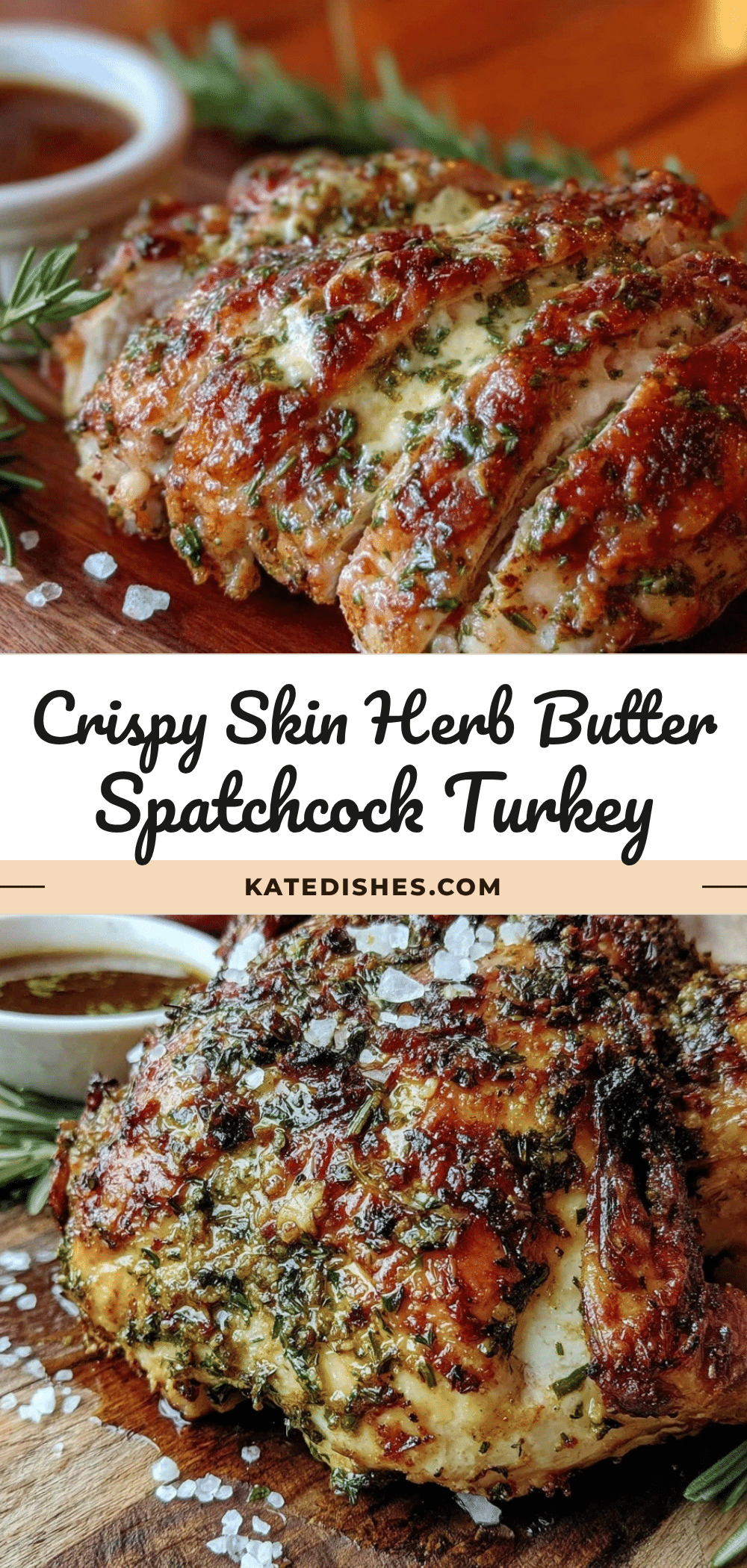
Perfect Dry-Brined Herb Butter Spatchcock Turkey Recipe for Crispy Skin
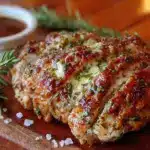
A quick and easy spatchcock turkey recipe featuring a dry brine and herb butter that yields juicy meat and irresistibly crispy skin, perfect for holidays and special occasions.
- Prep Time: 10 minutes (plus 24-48 hours dry brining)
- Cook Time: 1 hour 15 minutes to 1 hour 45 minutes
- Total Time: 1 day 15 minutes to 2 days 5 minutes (including dry brining)
- Yield: 10-12 servings
- Category: Main Course
- Cuisine: American
Ingredients
- Whole turkey (12-14 pounds), spatchcocked (backbone removed, flattened)
- Coarse kosher salt (about 1 tablespoon per 5 pounds)
- Freshly ground black pepper
- Unsalted butter (1/2 cup / 115 g), softened
- Fresh rosemary (1 tablespoon), finely chopped
- Fresh thyme leaves (1 tablespoon), finely chopped
- Fresh sage (1 tablespoon), finely chopped
- Garlic (4 cloves), minced
- Lemon zest (1 teaspoon), finely grated
- Fresh parsley (2 tablespoons), chopped (optional)
- Ground white pepper (optional)
- Vegetables for roasting bed (optional): carrots, celery, onions, roughly chopped
Instructions
- Dry brine the turkey 24-48 hours ahead: Pat the spatchcocked turkey dry. Sprinkle kosher salt evenly all over the skin and under the skin where possible, about 1 tablespoon per 5 pounds. Place on a wire rack over a rimmed baking sheet and refrigerate uncovered or loosely covered for 24 to 48 hours.
- Make the herb butter: In a medium bowl, combine softened butter, rosemary, thyme, sage, garlic, lemon zest, parsley, and white pepper if using. Mix thoroughly.
- Prepare the turkey for roasting: Remove turkey from fridge 30 minutes before roasting. Loosen skin gently and spread about two-thirds of the herb butter under the skin, concentrating on breast and thighs. Rub remaining butter over outside skin.
- Preheat oven to 450°F (230°C). Place chopped vegetables in roasting pan if using, set wire rack on top, and position turkey skin-side up on rack, legs splayed out.
- Roast turkey at 450°F for 30 minutes to brown skin, then reduce oven to 350°F (175°C) and roast for another 45-60 minutes. Total cooking time is about 12-15 minutes per pound.
- Check doneness with instant-read thermometer inserted into thickest part of breast and thigh; turkey is done at 165°F (74°C).
- Remove turkey from oven and tent loosely with foil. Let rest for 20-30 minutes to redistribute juices.
- Carve by slicing between breast and leg joints and serve warm.
Notes
For crispier skin, broil for 2-3 minutes at the end but watch carefully to avoid burning. Use a thermometer to avoid overcooking. Resting the turkey is essential for juicy meat. Fresh herbs are preferred but dried can be used at half quantity. Butter can be swapped for plant-based margarine or coconut oil for dairy-free option. Spatchcocking reduces cooking time and promotes even cooking.
Nutrition
- Serving Size: 4 ounces (113 grams)
- Calories: 170
- Sodium: 350
- Fat: 8
- Saturated Fat: 4.5
- Protein: 30
Keywords: turkey, spatchcock turkey, dry brine, herb butter, crispy skin, holiday turkey, Thanksgiving turkey, roasted turkey