“You wouldn’t believe it,” my neighbor Rob said as he handed me a handful of freshly picked peas from his garden last spring. I was halfway through fixing my creaky kitchen faucet, and honestly, my mind was more on dinner than dripping pipes. That unexpected moment—peas in hand and a stubborn wrench in the other—led to one of my favorite discoveries: a fresh spring vegetable pasta primavera with creamy lemon sauce that’s as bright and lively as those early garden greens.
I remember juggling the tools and ingredients, dropping a lemon zest peel on the floor (of course, right before guests arrived), and laughing at my own mess. But that first bite? It was like sunshine and comfort all wrapped up in a bowl. Maybe you’ve been there, craving something fresh but comforting when the season shifts—this recipe nails just that.
What’s great is that it’s not some fussy restaurant dish. It’s approachable, homey, and feels like a hug from spring itself. I keep coming back to it—partly because of its zingy lemon cream sauce that’s just the right balance of tang and silkiness, and partly because the vegetables remain crisp and vibrant, celebrating the season. It’s definitely a dish that stayed with me, and I hope it finds a place in your kitchen too.
Why You’ll Love This Recipe
Honestly, this fresh spring vegetable pasta primavera with creamy lemon sauce is one of those recipes that checks all the boxes without a ton of fuss. I’ve tested it multiple times in my kitchen, tweaking the sauce for just the right creaminess and the veggies for that perfect snap. It’s become a go-to for those evenings when I want something light but satisfying.
- Quick & Easy: Ready in about 30 minutes—ideal for busy weeknights or whenever spring cravings hit.
- Simple Ingredients: Uses everyday pantry and fridge staples, plus fresh seasonal veggies that you can swap based on what’s fresh at your market.
- Perfect for Springtime Meals: Bright, fresh, and colorful—great for brunches, casual dinners, or even potlucks.
- Crowd-Pleaser: My family, including picky eaters, always asks for seconds, thanks to the balanced flavors and creamy sauce.
- Unbelievably Delicious: The zing of lemon paired with the creamy sauce and crisp-tender veggies makes this pasta feel both indulgent and fresh.
What sets this recipe apart is the creamy lemon sauce that I make by gently blending cream and lemon zest, giving it a silky texture without overwhelming the freshness of the vegetables. Plus, I love tossing in peas, asparagus, and colorful bell peppers to celebrate spring’s bounty. It’s not just pasta primavera; it’s my take on a classic that’s both comforting and lively, perfect for those who want something a little different but reliably delicious.
What Ingredients You Will Need
This fresh spring vegetable pasta primavera recipe relies on simple, wholesome ingredients to deliver bold flavors and satisfying texture without any hassle. Most of what you need is probably already in your kitchen or easily found at your local market this season.
- Pasta: 12 oz (340 g) of fettuccine or linguine (I prefer Barilla for consistent texture)
- Olive Oil: 2 tablespoons, extra virgin (adds richness and helps sauté veggies)
- Fresh Vegetables:
- 1 cup fresh peas (shelled, or frozen if fresh aren’t available)
- 1 bunch asparagus, trimmed and cut into 2-inch pieces
- 1 red bell pepper, thinly sliced (adds sweetness and color)
- 1 small zucchini, sliced into half-moons
- 2 cloves garlic, minced (for aromatic depth)
- Creamy Lemon Sauce:
- 1 cup (240 ml) heavy cream or half-and-half (for a lighter option)
- Zest and juice of 1 large lemon (fresh is key for brightness)
- 1/2 cup (50 g) freshly grated Parmesan cheese (I like Parmigiano-Reggiano for authentic flavor)
- Salt and freshly ground black pepper, to taste
- Fresh Herbs: 1/4 cup chopped fresh basil or parsley (optional, but adds lovely brightness)
- Butter: 1 tablespoon unsalted, for a silky finish (optional but recommended)
Tip: If you want a dairy-free version, swap cream with full-fat coconut milk and use nutritional yeast instead of Parmesan. For gluten-free pasta, brown rice or chickpea pasta works nicely without losing texture.
Equipment Needed
- Large pot for boiling pasta (preferably with a strainer insert for easy draining)
- Large sauté pan or skillet (a non-stick pan works well for sautéing vegetables)
- Microplane or fine grater for lemon zest and Parmesan
- Citrus juicer (optional but handy for lemon juice)
- Wooden spoon or silicone spatula for stirring
- Colander for draining pasta
- Measuring cups and spoons
If you don’t have a microplane, a small grater or even a sharp knife to finely mince lemon zest will do just fine. For sautéing, I personally prefer a heavy-bottomed skillet because it distributes heat evenly and reduces the chance of burning delicate veggies. Budget tip: you can find good quality non-stick pans around $20-$30 that last surprisingly well if you care for them gently.
Preparation Method
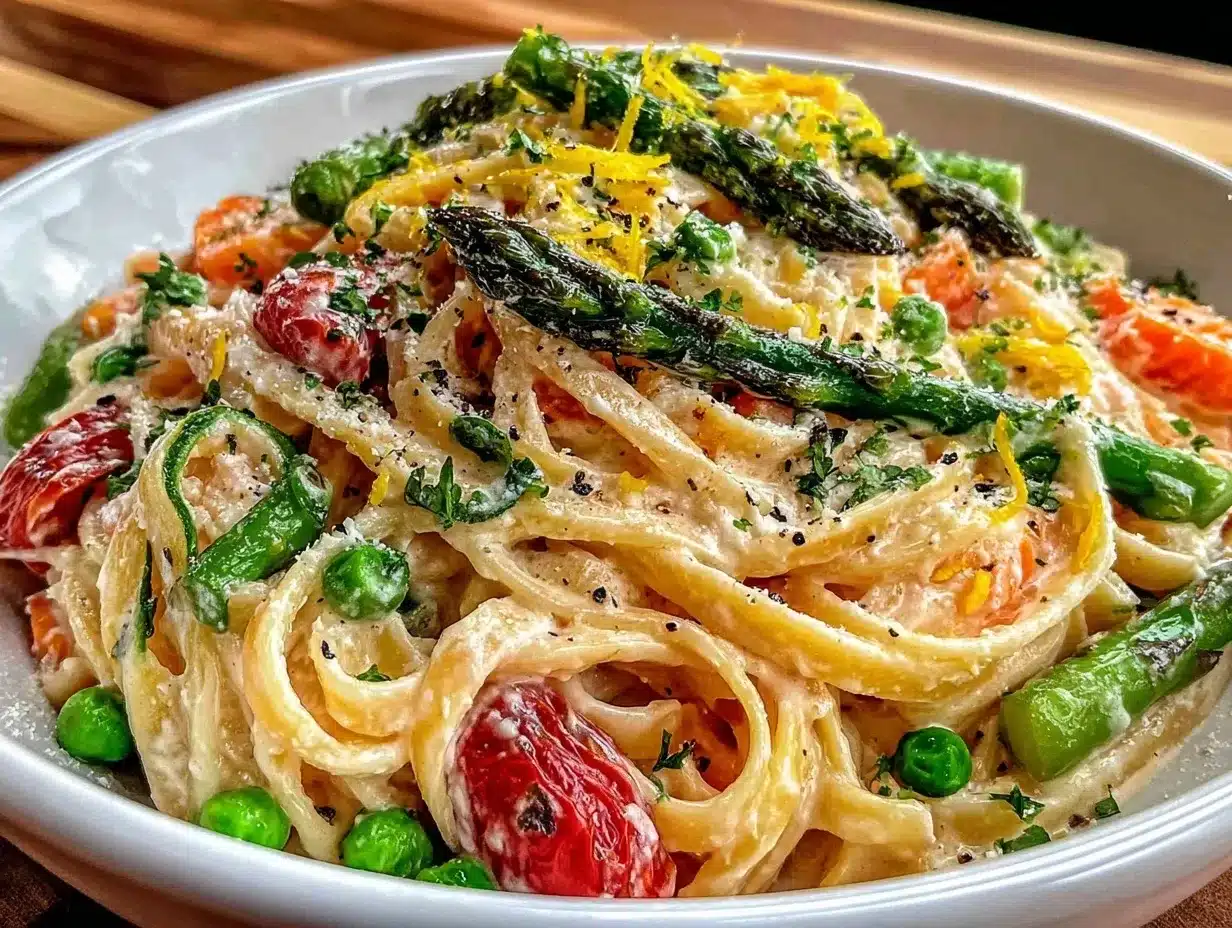
- Cook the pasta: Bring a large pot of salted water to a boil. Add 12 oz (340 g) of fettuccine and cook according to package instructions (usually 9-11 minutes) until al dente. Reserve 1 cup (240 ml) of pasta water before draining. This starchy water will help loosen the sauce later.
- Prepare the vegetables: While the pasta cooks, heat 2 tablespoons of extra virgin olive oil in a large skillet over medium heat. Add minced garlic and sauté for about 30 seconds until fragrant but not browned.
- Add the asparagus, bell pepper, and zucchini: Cook for 4-5 minutes, stirring occasionally, until vegetables are crisp-tender and bright in color. Add fresh peas last and cook for another 2 minutes. If using frozen peas, add them directly and cook until warmed through.
- Make the creamy lemon sauce: Lower heat to medium-low. Stir in 1 cup (240 ml) heavy cream, lemon zest, and juice of 1 large lemon. Let the sauce simmer gently for 3-4 minutes, stirring frequently, until slightly thickened. Avoid boiling or the cream might separate.
- Incorporate Parmesan and butter: Stir in 1/2 cup (50 g) grated Parmesan and 1 tablespoon unsalted butter until melted and smooth. Season with salt and freshly ground black pepper to taste. If the sauce is too thick, add reserved pasta water a little at a time until desired consistency.
- Toss pasta and sauce: Add the drained pasta to the skillet and toss well to coat evenly. Cook together for 1-2 minutes so pasta absorbs the sauce flavors. Add chopped fresh basil or parsley if using, tossing gently.
- Serve immediately: Divide pasta among plates or bowls. Optionally sprinkle extra Parmesan and a few lemon zest shreds on top for a fresh finish.
Pro tip: If you accidentally overcook the veggies, toss them with ice water right after sautéing to keep that fresh snap before adding the sauce. Also, keep an eye on the sauce temperature—it should never boil hard, or it might curdle. Slow and steady wins here!
Cooking Tips & Techniques
Getting that perfect balance between creamy sauce and crisp vegetables can be tricky, but here’s what I’ve learned through trial and error. First, timing is everything. Cook pasta just shy of al dente because it will keep softening once mixed with the sauce. I like to reserve pasta water—it’s pure gold for adjusting sauce thickness without watering down flavor.
When sautéing vegetables, medium heat is your friend. Too hot and the delicate asparagus or zucchini can scorch; too low and they’ll sweat and get mushy. Keep them moving in the pan, and aim for that tender-crisp texture that gives pasta primavera its charm.
For the lemon sauce, zest first and juice second—zest holds the essential oils that give a bright aroma, while juice adds tang. Avoid adding lemon juice too early in the sauce-making process; otherwise, the acidity might cause the cream to separate. Stir the sauce gently and steadily as it thickens to keep it silky.
Lastly, don’t rush tossing the pasta in the sauce. Let them mingle for a minute or two on low heat so every strand is coated and flavorful. I’ve learned the hard way that skipping this step can result in a less cohesive dish.
Variations & Adaptations
- Protein Boost: Add grilled chicken strips or sautéed shrimp for a heartier meal. Cook separately and fold in at the end.
- Vegan Version: Use coconut cream or cashew cream instead of heavy cream, and substitute nutritional yeast for Parmesan. Add extra lemon zest for brightness.
- Seasonal Swaps: In early spring, swap peas for fava beans or baby artichokes. In late spring, morel mushrooms or fresh peas work beautifully.
- Gluten-Free: Use gluten-free pasta made from rice, corn, or chickpeas. Cooking times may vary, so check package instructions carefully.
- Spicy Kick: Add a pinch of red pepper flakes to the sauce for subtle heat that contrasts nicely with the lemon cream.
I once tried this dish with roasted cherry tomatoes instead of bell peppers, and the sweet acidity was a delightful twist. Don’t be afraid to experiment with whatever fresh veggies you have on hand!
Serving & Storage Suggestions
This pasta primavera is best served hot, fresh from the pan, to enjoy the contrast between creamy sauce and crisp veggies. I like to plate it in shallow bowls and garnish with a sprinkle of fresh herbs and a twist of lemon zest for a vibrant presentation.
It pairs wonderfully with a light white wine like a Sauvignon Blanc or a crisp sparkling water with a lemon wedge. For a side, a simple mixed green salad with a citrus vinaigrette complements the flavors well.
Leftovers keep well in an airtight container in the refrigerator for up to 2 days. When reheating, add a splash of cream or pasta water and warm gently on the stove to revive the sauce’s silkiness. Microwave reheating can dry the pasta out, so stovetop is preferred.
Interestingly, the flavors meld nicely overnight, so sometimes I make it a day ahead for a slightly more intense lemon and herb profile. Just add a little fresh lemon juice before serving to brighten it back up.
Nutritional Information & Benefits
Per serving (based on 4 servings), this fresh spring vegetable pasta primavera with creamy lemon sauce provides approximately:
| Calories | 420 kcal |
|---|---|
| Protein | 14 g |
| Carbohydrates | 48 g |
| Fat | 15 g |
| Fiber | 5 g |
This dish packs a good mix of complex carbs from the pasta and fiber from the fresh spring vegetables. The lemon adds a boost of vitamin C, which supports immune health. Using fresh herbs not only lifts the flavor but adds antioxidants. For those watching calories, using half-and-half instead of heavy cream cuts fat and calories without losing creaminess.
Note: Contains dairy and gluten. Use substitutions as needed for allergies or dietary restrictions.
Conclusion
Fresh spring vegetable pasta primavera with creamy lemon sauce is a dish that feels like a celebration of the season—bright, fresh, and satisfying without fuss. It’s perfect for anyone who loves the idea of spring on a plate but needs a recipe that’s straightforward and forgiving.
Whether you stick to the classic veggies or try your own twists, this recipe invites you to make it your own. I love it because it reminds me of those random, joyful moments in the kitchen—like a neighbor’s peas turning a quick dinner into something special.
Give it a try, and don’t hesitate to share your versions or questions below. Cooking is better when we share little stories and tips, don’t you think?
Frequently Asked Questions
Can I use other types of pasta for this primavera?
Absolutely! Spaghetti, penne, or farfalle work well. Just adjust cooking times accordingly.
How can I make this recipe vegan?
Swap heavy cream for coconut or cashew cream and use nutritional yeast instead of Parmesan cheese.
Is it okay to use frozen vegetables?
Yes, frozen peas and asparagus can be used. Just add them towards the end of sautéing to avoid mushiness.
Can I prepare the sauce in advance?
You can make the lemon cream sauce ahead but combine it with pasta and veggies just before serving for best texture.
What if I don’t have fresh lemon zest?
Fresh zest is best, but if unavailable, a small amount of lemon extract or finely grated lemon peel can substitute in a pinch.
Pin This Recipe!
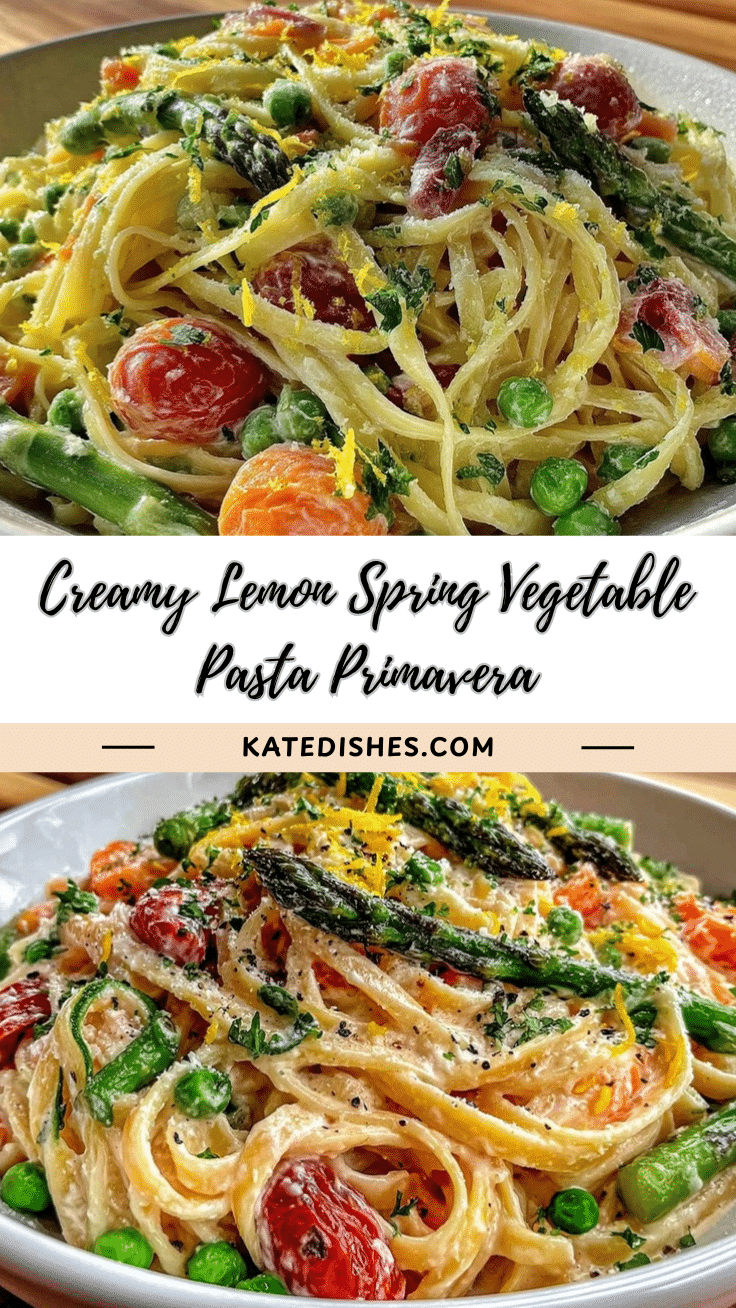
Fresh Spring Vegetable Pasta Primavera Recipe with Easy Creamy Lemon Sauce
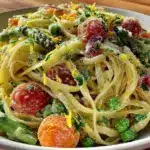
A bright and lively pasta primavera featuring fresh spring vegetables tossed in a creamy lemon sauce, perfect for a quick and satisfying meal.
- Prep Time: 10 minutes
- Cook Time: 20 minutes
- Total Time: 30 minutes
- Yield: 4 servings 1x
- Category: Main Course
- Cuisine: Italian
Ingredients
- 12 oz (340 g) fettuccine or linguine pasta
- 2 tablespoons extra virgin olive oil
- 1 cup fresh peas (shelled, or frozen if fresh aren’t available)
- 1 bunch asparagus, trimmed and cut into 2-inch pieces
- 1 red bell pepper, thinly sliced
- 1 small zucchini, sliced into half-moons
- 2 cloves garlic, minced
- 1 cup (240 ml) heavy cream or half-and-half
- Zest and juice of 1 large lemon
- 1/2 cup (50 g) freshly grated Parmesan cheese
- Salt and freshly ground black pepper, to taste
- 1/4 cup chopped fresh basil or parsley (optional)
- 1 tablespoon unsalted butter (optional)
Instructions
- Bring a large pot of salted water to a boil. Add 12 oz (340 g) of fettuccine and cook according to package instructions (usually 9-11 minutes) until al dente. Reserve 1 cup (240 ml) of pasta water before draining.
- While the pasta cooks, heat 2 tablespoons of extra virgin olive oil in a large skillet over medium heat. Add minced garlic and sauté for about 30 seconds until fragrant but not browned.
- Add the asparagus, bell pepper, and zucchini to the skillet. Cook for 4-5 minutes, stirring occasionally, until vegetables are crisp-tender and bright in color. Add fresh peas last and cook for another 2 minutes. If using frozen peas, add them directly and cook until warmed through.
- Lower heat to medium-low. Stir in 1 cup (240 ml) heavy cream, lemon zest, and juice of 1 large lemon. Let the sauce simmer gently for 3-4 minutes, stirring frequently, until slightly thickened. Avoid boiling.
- Stir in 1/2 cup (50 g) grated Parmesan and 1 tablespoon unsalted butter until melted and smooth. Season with salt and freshly ground black pepper to taste. If the sauce is too thick, add reserved pasta water a little at a time until desired consistency.
- Add the drained pasta to the skillet and toss well to coat evenly. Cook together for 1-2 minutes so pasta absorbs the sauce flavors. Add chopped fresh basil or parsley if using, tossing gently.
- Serve immediately, optionally sprinkling extra Parmesan and a few lemon zest shreds on top.
Notes
If you want a dairy-free version, swap cream with full-fat coconut milk and use nutritional yeast instead of Parmesan. For gluten-free pasta, use brown rice or chickpea pasta. Avoid boiling the cream sauce to prevent curdling. Toss overcooked veggies in ice water to keep crispness. Reserve pasta water to adjust sauce consistency.
Nutrition
- Serving Size: 1 serving (approxima
- Calories: 420
- Fat: 15
- Carbohydrates: 48
- Fiber: 5
- Protein: 14
Keywords: pasta primavera, spring vegetables, creamy lemon sauce, easy pasta recipe, vegetarian pasta, fresh peas, asparagus, lemon zest, quick dinner