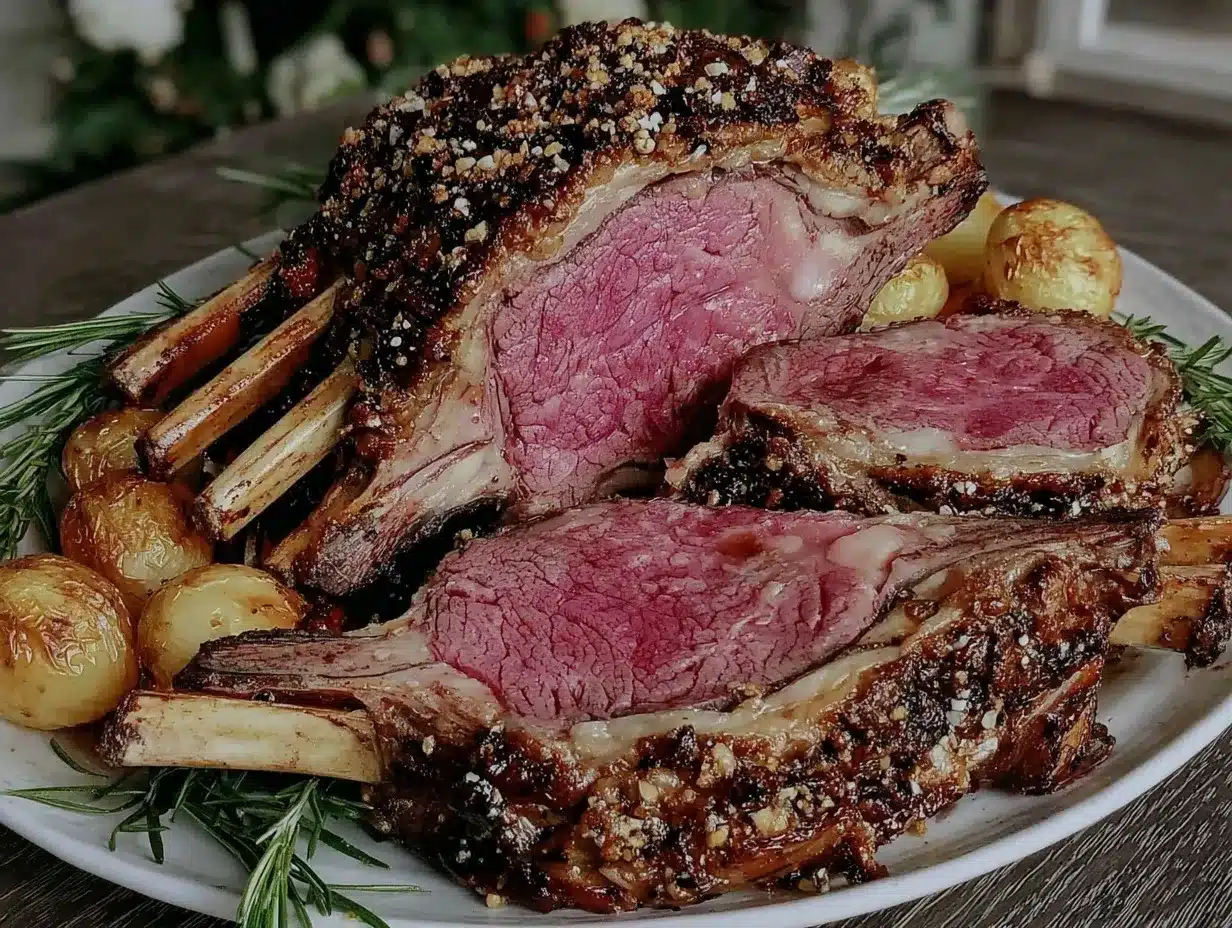
Let me just say, nothing—and I mean nothing—compares to the aroma of a standing rib roast filling your kitchen. The savory scent of garlic, rosemary, and beef mingling in the oven is pretty much the definition of holiday magic. That golden-brown crust, the juicy pink interior, and the way the juices sizzle when you carve into it—it’s the kind of sensory memory that stays with you long after the plates are cleared.
The first time I tackled this standing rib roast recipe, I was a bundle of nerves. My grandma used to make it every Christmas, and I was determined to recreate that same “wow” factor (even if I was just a rookie with a meat thermometer). I’ll never forget that first slice—the one where you pause, breathe in, and realize you’ve nailed it. That’s the moment I knew this recipe was something special—a keeper for years to come.
When I was knee-high to a grasshopper, this roast meant family piled around the table, stories flying, and the clatter of serving spoons. Now, it’s my go-to for special occasions: birthdays, anniversaries, or when I just want to spoil my crew. My family can’t help but sneak little bites as it rests on the cutting board (and honestly, I don’t blame them). It’s dangerously easy to fall in love with—pure, nostalgic comfort with a touch of elegance.
Whether you’re looking to impress your in-laws, host a dreamy holiday dinner, or just brighten up your Pinterest board with a showstopping centerpiece, this standing rib roast recipe fits the bill. I’ve tested it—more than once—in the name of research, of course. It’s become my secret weapon for family gatherings and gift-worthy leftovers. If you’re craving something that feels like a warm hug and tastes like a celebration, you’re going to want to bookmark this one.
Why You’ll Love This Standing Rib Roast Recipe
I get it—making a standing rib roast seems intimidating. But after years of trial, error, and triumph, I promise you: this method is as foolproof as it gets. Here’s why this recipe is a cut above the rest (pun absolutely intended):
- Quick & Easy: Prepping takes less than 20 minutes, and the oven does the heavy lifting. You can even mingle with guests while it roasts—no babysitting required.
- Simple Ingredients: No need for fancy gadgets or rare spices. Everything you need is probably already in your pantry or fridge.
- Perfect for Special Occasions: It’s a guaranteed crowd-pleaser for holidays, birthdays, or any day you want to make unforgettable.
- Crowd-Pleaser: Kids, grandparents, and picky eaters all dig in with gusto. There’s never a scrap left at my house.
- Unbelievably Delicious: The crust is savory and crisp, the inside stays buttery-tender, and the flavors are out of this world.
So, what makes this standing rib roast recipe different? For starters, I use a classic dry rub that lets the natural beefy flavor shine—no need for complicated marinades. The roasting technique is chef-tested (and home cook-approved), and the trick is a two-step temperature process: a blast of heat for an irresistible crust, then a slow finish for even doneness. Trust me, it’s the difference between a “good” roast and a showstopper.
This isn’t just another rib roast. It’s the one that makes people close their eyes and sigh with happiness. It’s comfort food with a side of celebration—easy enough for a Sunday dinner, but fancy enough for Christmas. And, honestly, it’s perfect if you like a recipe that’s impressive yet stress-free (because who needs extra stress during the holidays?).
Whether you’re a first-timer or a seasoned host, this standing rib roast recipe lets you serve up something memorable—without breaking a sweat. That’s what I call a win-win!
What Ingredients You Will Need
This standing rib roast recipe is all about simple, high-quality ingredients that deliver maximum flavor. Most of these are pantry staples, so you won’t have to make a wild dash to the market. Here’s what you’ll need:
- For the Roast:
- Standing rib roast (prime rib), 6-7 lbs (2.7-3.2 kg), bone-in (ask your butcher to French the bones for a showy presentation, or leave as is for rustic flair)
- Kosher salt, 2 tablespoons (don’t skimp—this seasons the entire roast)
- Freshly ground black pepper, 2 teaspoons
- For the Herb-Garlic Rub:
- Garlic cloves, 5 large, minced or grated (adds punchy flavor)
- Fresh rosemary, 2 tablespoons, finely chopped (or 2 teaspoons dried)
- Fresh thyme, 2 tablespoons, finely chopped (or 2 teaspoons dried)
- Olive oil, 3 tablespoons (helps the rub stick and promotes browning)
- Optional: Dijon mustard, 1 tablespoon (for a tangy kick—my husband’s favorite twist)
- For the Pan:
- Yellow onion, 1 large, quartered (creates a flavorful base and keeps drippings from burning)
- Carrots, 2 large, cut into chunks
- Celery stalks, 2, cut into chunks
- Beef broth or water, 2 cups (for a rich, savory jus—use low-sodium if you’re sensitive to salt)
Ingredient Tips:
- Choosing the Roast: Look for well-marbled, bright red beef. I prefer USDA Prime or Choice grade for tenderness—you can even ask your butcher for recommendations.
- Herbs: Fresh is best, but dried herbs work in a pinch. If you have leftover parsley, toss it in for extra freshness.
- Substitutions: No olive oil? Melted butter works, too. No Dijon? Try horseradish for a spicy twist. For a gluten-free version, skip the mustard and check your broth label.
- Vegetables: Swap in parsnips or leeks for a seasonal spin. In a pinch, even just onions will do.
I usually grab my roast from a local butcher who knows their stuff, but I’ve also had great results with supermarket cuts. The key is to let the roast sit at room temperature before roasting—makes all the difference for even cooking.
Equipment Needed
You don’t need a chef’s kitchen for this standing rib roast recipe, but having the right tools helps. Here’s my go-to list (and some handy swaps):
- Large Roasting Pan: Sturdy, with sides at least 2 inches high. If you don’t have one, a heavy-duty rimmed baking sheet works (just watch for drips).
- Roasting Rack: Helps lift the meat for even heat circulation. No rack? Crumple up some foil or use thick-cut veggies as a base.
- Meat Thermometer: Absolutely essential for perfect doneness. I use a digital instant-read, but an analog one works fine. Trust me, guessing isn’t worth the risk!
- Sharp Chef’s Knife: For carving those beautiful slices. Keep it sharp for best results (honestly, I use a $20 sharpener—works like a charm).
- Cutting Board: Preferably with a groove to catch the juices—less mess, more flavor saved.
- Small Mixing Bowl & Spoon: For the herb-garlic rub.
- Aluminum Foil: To tent the roast while resting.
I’ve made this standing rib roast with just a basic baking sheet and borrowed thermometer, and it still turned out dreamy. Just avoid glass pans—they can shatter at high heat. And, if you use nonstick pans, let them cool before washing (prolongs their life!).
How to Prepare the Perfect Standing Rib Roast
-
Let the Roast Come to Room Temperature
Take the standing rib roast out of the fridge at least 2 hours before roasting (for a 6-7 lb/2.7-3.2 kg roast). This helps it cook evenly. Pat it dry with paper towels—this is key for getting that gorgeous crust. -
Preheat Your Oven
Set your oven to 450°F (232°C). Position a rack in the lower third of the oven. If your oven runs hot, you may want to check with an oven thermometer. -
Prepare the Herb-Garlic Rub
In a small bowl, combine 5 minced garlic cloves, 2 tablespoons each of chopped rosemary and thyme (or 2 teaspoons dried each), 3 tablespoons olive oil, and 1 tablespoon Dijon mustard (if using). Stir until it forms a paste. -
Season the Roast
Sprinkle 2 tablespoons kosher salt and 2 teaspoons black pepper evenly over the entire roast. Really massage it in—don’t be shy! Then slather the herb-garlic paste all over the roast, making sure to coat every nook and cranny. -
Set Up Your Roasting Pan
Scatter the quartered onion, carrot chunks, and celery chunks in the bottom of your roasting pan. Pour in 2 cups beef broth or water. Place the roasting rack (or your makeshift foil rack) over the veggies. -
Place the Roast in the Pan
Set the rib roast bone-side down (fat cap up) on the rack. This position keeps the meat juicy and tender by basting itself as it cooks. -
Bake at High Heat
Roast in the preheated oven for 20 minutes. This creates a beautifully browned crust. Warning: your kitchen will smell amazing—good luck keeping snackers away! -
Reduce Oven Temperature
Without opening the oven, lower the temperature to 325°F (163°C). Continue roasting for 1 hour 45 minutes to 2 hours 15 minutes, or until the internal temperature reaches:- 120°F (49°C) for rare
- 130°F (54°C) for medium-rare (my personal favorite)
- 140°F (60°C) for medium
Tip: Check temp early to avoid overcooking. Insert the thermometer into the thickest part, not touching bone.
-
Rest the Roast
Transfer the roast to a cutting board and tent loosely with foil. Let it rest at least 30 minutes—this keeps it juicy. (The temp will rise about 5°F/3°C while resting.) -
Make the Au Jus (Optional)
Pour the pan drippings through a fine mesh strainer into a saucepan. Skim excess fat, then simmer for 5–10 minutes to reduce and concentrate flavors. Taste and add salt if needed. -
Carve and Serve
Use a sharp knife to cut between the bones into thick slices. Serve with warm jus, roasted veggies, and your favorite sides—don’t forget the horseradish sauce!
Preparation Notes:
- If your roast is smaller or larger, adjust cook time (about 15-20 minutes per pound at 325°F/163°C after initial sear).
- If the crust starts getting too dark, tent loosely with foil.
- Letting the roast rest is non-negotiable—unless you want dry beef (and no one wants that).
Cooking Tips & Techniques
Let’s face it, cooking a standing rib roast for the first time can feel like a high-wire act. Here are my battle-tested tips for nailing it every time:
- Use a Thermometer: I learned the hard way—guessing means stress. Invest in a thermometer and check early. Better under than over!
- Dry the Meat Well: Patting the roast dry helps the seasoning stick and the crust form. Damp meat = no crust (ask me how I know…)
- Room Temperature Matters: Cold meat in a hot oven leads to uneven cooking—don’t skip the resting step before roasting.
- Don’t Skip the Rest: Resting lets juices settle. If you carve too soon, the juices run everywhere but your plate.
- Multitask Like a Pro: While the roast is in the oven, prep your sides and set the table. The oven’s doing the heavy lifting.
- Check on the Crust: If it’s browning too quickly, a loose foil tent saves the day. I’ve forgotten before and had to trim off a burnt edge (still tasty, just not Pinterest-pretty).
- Au Jus Rescue: If your pan drippings are too salty, add a splash of water or low-sodium broth to mellow them out.
- Practice Makes Perfect: The first time might be nerve-wracking, but it gets easier. I botched my first one by overcooking, but the next time? Perfection!
Consistency comes from trusting your tools, following the temps, and letting the roast rest. After a few tries, you’ll feel like a pro—and your guests will think you’re one, too.
Variations & Adaptations
One of the best things about a standing rib roast is how customizable it is. Here’s how you can switch things up:
- Herb & Spice Variations: Swap rosemary and thyme for sage and oregano for a Mediterranean twist. Love heat? Add a teaspoon of crushed red pepper flakes to the rub.
- Garlic Butter Crust: Mix 3 tablespoons softened butter with 5 minced garlic cloves and fresh parsley. Slather on top before roasting for extra richness (my dad’s personal favorite!).
- Low-Carb & Keto: Skip the root veggies in the pan and use celery and onion only. Serve with cauliflower mash instead of potatoes.
- Cooking Methods: If you don’t have an oven, you can try this on a covered charcoal grill with indirect heat. Just monitor the temp closely!
- Allergen Adaptations: For dairy-free, stick with olive oil in the rub. For gluten-free, check broth labels and use mustard without additives.
- Personal Twist: I sometimes swap Dijon for horseradish in the rub—adds zing that pairs so well with the rich beef.
Don’t be afraid to play with flavors or techniques. The standing rib roast recipe is forgiving—just watch your temps and have fun with it!
Serving & Storage Suggestions
This standing rib roast recipe shines brightest when served fresh, but leftovers are gold! Here’s how to make the most of every bite:
- Serving Temperature: Slice and serve warm, right after resting. If you like rare, serve immediately; for medium, let it sit a bit longer.
- Presentation Tip: Arrange slices on a warm platter, garnished with fresh herbs and roasted veggies. Drizzle with jus for that restaurant vibe.
- Perfect Pairings: I love it with creamy horseradish sauce, buttery mashed potatoes, sautéed green beans, and a big green salad. For drinks, red wine (like Cabernet) is a classic.
- Storing Leftovers: Cool completely, then wrap slices tightly in foil or store in airtight containers. Refrigerate up to 4 days, or freeze up to 2 months.
- Reheating: Warm slices in a 300°F (150°C) oven, wrapped in foil with a splash of broth to keep moist. Avoid microwaving—it dries out the meat.
- Flavor Over Time: The beef’s flavor actually deepens after a day or two—leftover sandwiches are incredible (try with caramelized onions and arugula).
If you’re hosting, prep sides ahead and let the roast be your showpiece. For storing, label your containers (trust me, you’ll thank yourself later).
Nutritional Information & Benefits
Here’s a quick look at what you’re enjoying with this standing rib roast recipe (per 6 oz/170 g serving, without jus or sides):
- Calories: ~450
- Protein: 38g
- Total Fat: 32g (Saturated Fat: 12g)
- Carbohydrates: 2g
- Sodium: 320mg
Rib roast is naturally rich in protein, iron, and B vitamins—great for energy and muscle health. If you’re watching fat, trim the outer layer or choose a leaner cut. This recipe is naturally gluten-free (just double-check your broth labels), and easily adapts for dairy-free folks by skipping butter.
Allergens to note: beef (obviously!), sometimes mustard or dairy in rub variations. Moderation is key, but for special occasions, this roast is worth every bite—both for taste and tradition!
Conclusion
If you’re searching for a standing rib roast recipe that’s easy, reliable, and downright delicious, this one’s for you. It’s wow-worthy enough for the fanciest holiday spread, but simple enough for a cozy family Sunday. The blend of savory herbs, juicy beef, and crispy crust is pure comfort—and yes, it really is that easy.
Feel free to mix up the herbs, try different rubs, or add your own twist. That’s the beauty of home cooking—making it yours. Honestly, this roast has a special spot in my heart (and my recipe box), and I hope it finds one in yours, too.
I’d love to hear how your standing rib roast turns out—leave a comment below, share your photos, or let me know what sides you served. Bookmark this recipe for your next celebration, and remember: you’ve got this! Wishing you happy cooking and even happier memories around the table.
Frequently Asked Questions
How much standing rib roast do I need per person?
Plan on about 1 pound (450g) of bone-in rib roast per adult—this allows for generous portions and accounts for the bone. For big eaters or fewer sides, err on the higher side.
Can I prepare the roast ahead of time?
Yes! You can season and rub the roast up to 24 hours ahead. Wrap tightly and refrigerate. Let it come to room temperature before roasting for best results.
What’s the best way to carve a standing rib roast?
Let the roast rest, then use a sharp chef’s knife to cut along the bone. Slice the meat into thick or thin pieces as desired. Serve immediately for best juiciness.
Can I make this recipe with a boneless rib roast?
Absolutely—just reduce the cooking time slightly, as boneless cooks a bit faster. The flavor and method stay the same.
What should I do with leftovers?
Leftover standing rib roast is perfect for sandwiches, salads, or even stir-fries. Store tightly wrapped in the fridge, and reheat gently in the oven for best texture.
Pin This Recipe!
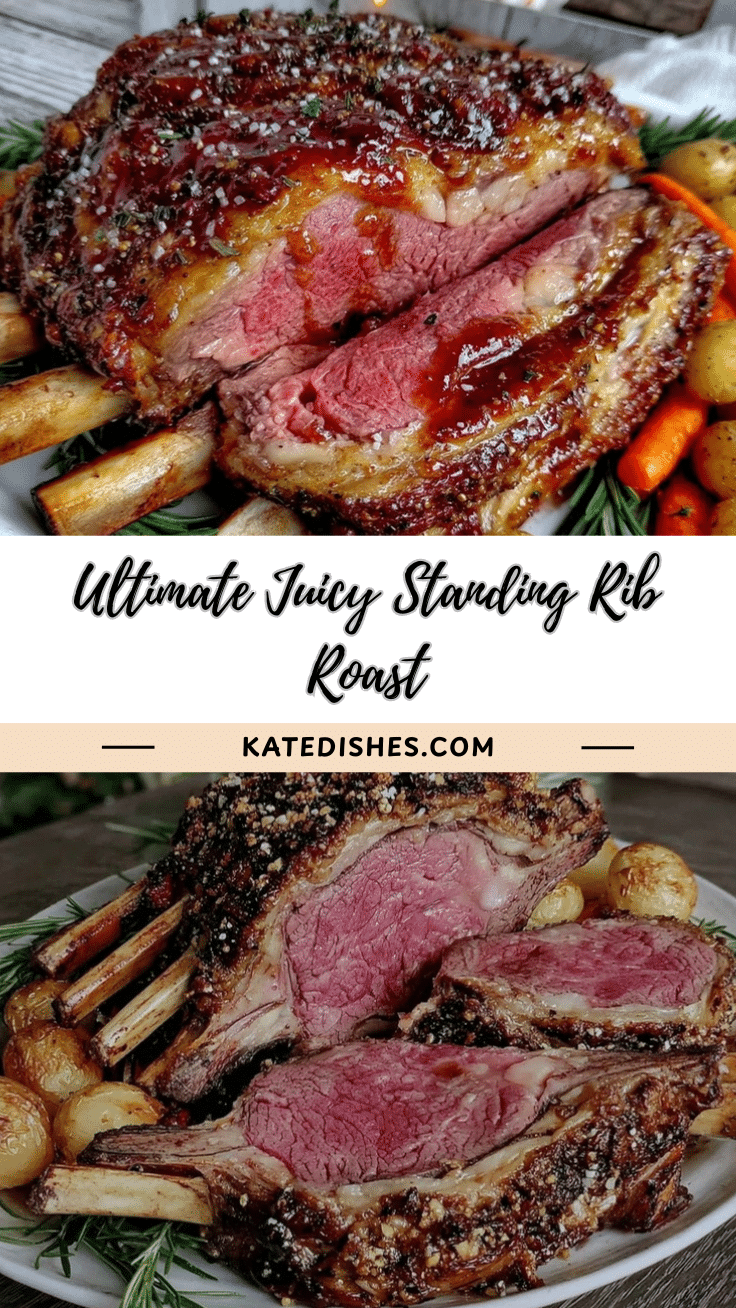
Standing Rib Roast Recipe: Best Easy Guide for Perfect Holiday Dinner
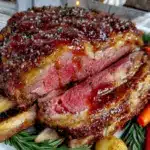
This standing rib roast recipe delivers a showstopping centerpiece with a golden-brown crust, juicy pink interior, and savory herb-garlic flavors. Perfect for holidays or special occasions, it’s surprisingly easy and guaranteed to impress.
- Prep Time: 20 minutes
- Cook Time: 2 hours 15 minutes
- Total Time: 2 hours 35 minutes
- Yield: 8 servings 1x
- Category: Main Course
- Cuisine: American
Ingredients
- 6–7 lbs bone-in standing rib roast (prime rib)
- 2 tablespoons kosher salt
- 2 teaspoons freshly ground black pepper
- 5 large garlic cloves, minced or grated
- 2 tablespoons fresh rosemary, finely chopped (or 2 teaspoons dried)
- 2 tablespoons fresh thyme, finely chopped (or 2 teaspoons dried)
- 3 tablespoons olive oil
- 1 tablespoon Dijon mustard (optional)
- 1 large yellow onion, quartered
- 2 large carrots, cut into chunks
- 2 celery stalks, cut into chunks
- 2 cups beef broth or water (low-sodium preferred)
Instructions
- Take the standing rib roast out of the fridge at least 2 hours before roasting. Pat dry with paper towels.
- Preheat oven to 450°F (232°C). Position rack in the lower third of the oven.
- In a small bowl, mix garlic, rosemary, thyme, olive oil, and Dijon mustard (if using) to form a paste.
- Sprinkle salt and pepper evenly over the roast. Massage in, then coat with herb-garlic paste.
- Scatter onion, carrot, and celery in the bottom of a large roasting pan. Pour in beef broth or water. Place roasting rack over veggies.
- Set roast bone-side down (fat cap up) on the rack.
- Roast at 450°F for 20 minutes to brown the crust.
- Reduce oven temperature to 325°F (163°C) without opening the oven. Continue roasting for 1 hour 45 minutes to 2 hours 15 minutes, or until internal temperature reaches 120°F for rare, 130°F for medium-rare, or 140°F for medium.
- Transfer roast to a cutting board, tent loosely with foil, and let rest at least 30 minutes.
- Optional: Strain pan drippings, skim fat, and simmer for 5–10 minutes to make au jus.
- Carve between bones into thick slices. Serve with jus and sides.
Notes
Let the roast come to room temperature before cooking for even doneness. Adjust cook time for different roast sizes (15-20 minutes per pound at 325°F after initial sear). Tent with foil if crust browns too quickly. Resting is essential for juicy meat. For gluten-free, check broth and mustard labels. Leftovers are excellent for sandwiches and salads.
Nutrition
- Serving Size: 6 oz (170 g) cooked
- Calories: 450
- Sodium: 320
- Fat: 32
- Saturated Fat: 12
- Carbohydrates: 2
- Protein: 38
Keywords: standing rib roast, prime rib, holiday dinner, beef roast, easy rib roast, Christmas roast, special occasion, herb garlic rub, oven roast, family dinner