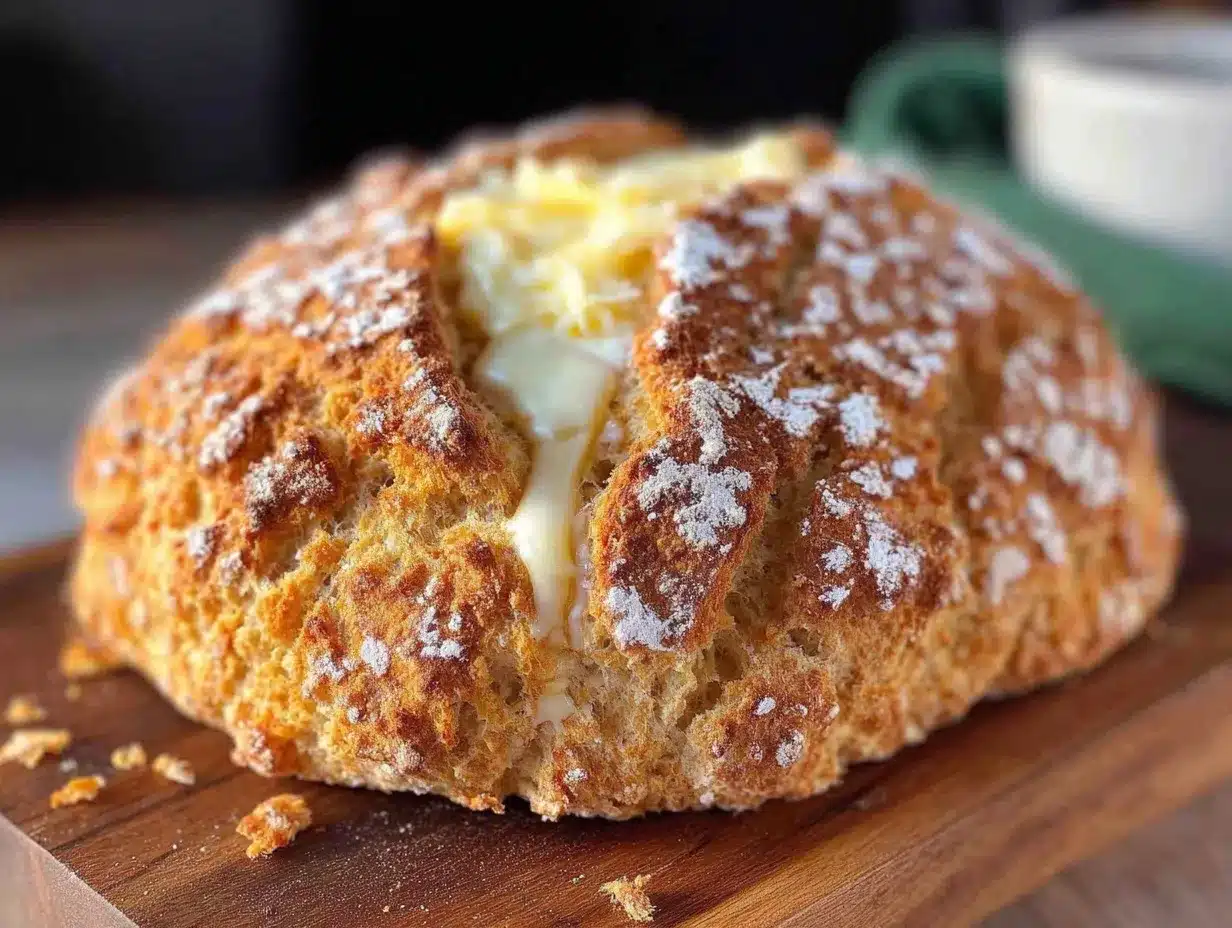
There’s just something about the smell of freshly baked Irish soda bread wafting through the house that makes everything feel right, you know? The scent of golden crust, a touch of tang from the buttermilk, and that unmistakable, warm, bready aroma that hugs you the moment you walk into the kitchen—oh, it’s pure magic. I remember the first time I pulled this Irish soda bread recipe from the oven; the crust was crackling, the top was gloriously rustic, and the anticipation was almost too much. I sliced off a wedge, slathered it with creamy butter, and took a bite. Instantly, I was hooked. It was one of those moments where you pause, let out a contented sigh, and just know you’ve created something special—something worth sharing.
This recipe takes me back to when I was knee-high to a grasshopper, watching my gran knead dough at the old wooden table, flour dusting her apron and a twinkle in her eye. She’d say, “It’s not fancy, but it’s good for the soul.” And she was right. Years ago, I thought bread baking was a complicated business, but soda bread—well, it’s beautifully simple. No yeast. No long rising times. Just honest-to-goodness ingredients and a bit of elbow grease. I wish I’d discovered how easy it was to make Irish soda bread from scratch a long time ago—could’ve saved myself from many a store-bought loaf!
My family can’t resist sneaking slices straight off the cooling rack (and honestly, I can’t blame them). Whether I’m baking it for St. Patrick’s Day, a cozy Sunday supper, or just to brighten up a rainy afternoon, this Irish soda bread is always a hit. It’s become a staple in our home—perfect for gifting, sharing, or just enjoying with a big mug of tea. I’ve tested this recipe more times than I can count (all in the name of research, of course) and every time, it feels like a warm hug in bread form. If you’re searching for a simple, satisfying, and downright delicious homemade bread, you’re going to want to bookmark this one. Welcome to your new favorite comfort recipe.
Why You’ll Love This Irish Soda Bread Recipe
Let’s face it—there are a million bread recipes out there, but none quite like this classic Irish soda bread with butter. After years of baking, testing, and tweaking, I can honestly say this one stands out for so many reasons. Here’s why I come back to it every single time:
- Quick & Easy: Ready from mixing bowl to table in about an hour. No waiting for dough to rise or fiddling with yeast. Perfect for last-minute cravings or when you want comforting carbs, fast.
- Simple Ingredients: Just a handful of pantry staples—flour, baking soda, buttermilk, salt, and a little sugar. No need for special trips to the store, and you probably have everything you need already.
- The Perfect Slice for Butter: The crumb of this Irish soda bread is dense yet tender—just right for soaking up a thick smear of good butter. Every bite is hearty, satisfying, and a little bit nostalgic.
- Crowd-Pleaser: Kids love it, adults love it, and it vanishes from the table every single time I serve it. It’s a must-have for potlucks, brunches, or cozy dinners with friends.
- No-Fail Method: If bread baking has ever intimidated you, this recipe is your new BFF. No kneading or fancy shaping. It’s basically impossible to mess up—even if you’re a first-timer.
- Comfort Food, Upgraded: Unlike other soda bread recipes that can be dry or bland, this one is moist, slightly tangy from the buttermilk, and just a tad sweet. It makes you want to close your eyes and savor every mouthful.
- Versatile: Enjoy it warm with butter, toasted with jam, or even alongside a big bowl of stew. It’s a bread that fits any occasion, season, or craving.
What makes my version a little different? Well, I’ve played with the proportions over the years (thanks, Gran!) and found a balance that gives just the right crust, crumb, and flavor. I blend the dry ingredients thoroughly, use cold buttermilk for the best rise, and score a cross on top to help it bake evenly (and for luck, as the old Irish saying goes). It’s the kind of recipe that’s more than just good—it’s soul-soothing comfort, ready in a snap, and guaranteed to bring a smile to your face. If you’ve ever been intimidated by homemade bread, give this Irish soda bread recipe a try. I think you’ll be pleasantly surprised by how easy—and delicious—it really is!
What Ingredients You Will Need
This Irish soda bread recipe is all about simple, honest ingredients that come together to create something truly comforting. You don’t need anything fancy—just a few things from your pantry and fridge. Here’s what you’ll need for the classic loaf:
- All-Purpose Flour (4 cups / 500g): The backbone of the bread. If you want a heartier loaf, you can swap in up to half whole wheat flour. I love King Arthur or Bob’s Red Mill for consistent results.
- Granulated Sugar (3-4 tbsp / 40-50g): Just enough to add a gentle sweetness. Some folks skip or reduce the sugar, but I find it balances the tang of the buttermilk.
- Baking Soda (1 tsp / 5g): The “soda” in soda bread! This reacts with the buttermilk to give the bread its rise. Make sure it’s fresh for the best lift.
- Salt (1 tsp / 6g): A must for flavor—don’t skimp. I usually reach for fine sea salt.
- Unsalted Butter (4 tbsp / 56g, cold and cubed): This adds richness and tenderness. If you only have salted butter, just reduce the added salt a bit.
- Buttermilk (1 3/4 cups / 420ml, cold): The secret to tender, tangy soda bread. If you don’t have buttermilk, you can make your own: add 1 tbsp lemon juice or white vinegar to regular milk and let it sit for 5-10 minutes.
If you want to jazz things up, here are a few optional add-ins:
- Raisins or Currants (1/2 cup / 75g): For a touch of sweetness and chew. Some call this “spotted dog” bread. My kids adore this version.
- Caraway Seeds (1-2 tsp): Adds a faintly anise-like flavor that’s traditional in some Irish families. Totally optional, but worth trying at least once.
- Egg (1, beaten): Not traditional, but a beaten egg can be added to the buttermilk for a richer crumb.
Ingredient Tips: For the best texture, sift your flour before measuring, especially if it’s been packed away for a while. Always use cold butter and buttermilk—this helps the bread stay tender and rise well. Don’t worry if the dough is a little shaggy or sticky; that’s how it should be. If you’re avoiding dairy, swap the buttermilk for a dairy-free version (just add lemon juice to almond or oat milk). Gluten-free all-purpose blends work, too, though the texture will be a bit different—still tasty for sure!
This simple ingredient list is proof you don’t need much to create something wonderful. And if you’re feeling adventurous, the add-ins are a fun way to make this Irish soda bread recipe your own.
Equipment Needed
You really don’t need much to whip up a loaf of Irish soda bread—another reason it’s so beloved in my kitchen! Here’s what you’ll use:
- Large Mixing Bowl: For combining the dry and wet ingredients. Any sturdy bowl works—I use my old ceramic one for nostalgia’s sake.
- Wooden Spoon or Dough Scraper: To gently mix the dough. (Hands work in a pinch, but it gets sticky.)
- Measuring Cups and Spoons: Essential for accuracy. A digital scale is even better if you have one—I find it leads to more reliable results.
- Baking Sheet or Cast Iron Skillet: Either works! I love baking my soda bread on a parchment-lined sheet for a crispier crust, but a well-seasoned cast iron skillet gives it a rustic edge.
- Sharp Knife: For scoring the top before baking. This helps it bake evenly (and looks charming, too).
- Parchment Paper: Makes cleanup a breeze and prevents sticking.
- Cooling Rack: If you have one. It helps the bread cool without getting soggy on the bottom.
If you don’t have a cast iron skillet, don’t worry—a regular baking sheet works just fine. I once made this on an old pizza pan at my cousin’s place and it turned out perfect. Make sure your knife is sharp for that classic cross on top. And if you’re using a favorite vintage bowl (like I do), just be gentle when mixing so you don’t chip it—those old bowls have stories to tell.
For budget-friendly options, dollar store measuring cups and a thrifted mixing bowl work just as well as fancy gear. The only thing to keep in mind: always wash up your tools right away, because soda bread dough can dry out and stick like glue. Trust me, I’ve learned the hard way!
How to Prepare Classic Irish Soda Bread
-
Preheat Your Oven
Set your oven to 425°F (220°C). Place a rack in the center. Line a baking sheet with parchment paper, or grease your cast iron skillet. This helps with easy release and cleanup. -
Combine Dry Ingredients
In a large mixing bowl, sift together 4 cups (500g) all-purpose flour, 3-4 tablespoons (40-50g) granulated sugar, 1 teaspoon (5g) baking soda, and 1 teaspoon (6g) salt. Use a whisk or fork to blend evenly.
Tip: Sifting helps prevent lumps and keeps your bread nice and light. -
Cut in the Butter
Add 4 tablespoons (56g) cold, cubed butter to the flour mixture. Using a pastry cutter, two knives, or your fingertips, work the butter into the dry ingredients until the mixture looks like coarse crumbs.
Sensory cue: The flour should feel sandy, with little pea-sized bits of butter throughout. -
Add Wet Ingredients
Make a well in the center of your dry ingredients. Pour in 1 3/4 cups (420ml) cold buttermilk. If you’re adding an egg for richness, beat it into the buttermilk first.
If using raisins, currants, or caraway seeds, toss them in now.
Troubleshooting: If the dough seems dry, add an extra tablespoon of buttermilk at a time. -
Mix the Dough
Stir gently with a wooden spoon or dough scraper until just combined. The dough will be sticky and a little rough—that’s perfect.
Warning: Don’t over-mix or knead. Overworking the dough can make the bread tough. -
Shape the Loaf
Turn the dough out onto a lightly floured surface. With floured hands, shape it into a round loaf about 7-8 inches (18-20 cm) wide. Transfer to your prepared baking sheet or skillet.
Tip: Sprinkle a little extra flour on top for that classic rustic look. -
Score the Top
Using a sharp knife, cut a deep “X” across the top of the loaf (about ½ inch deep). This helps the bread bake evenly and gives it that iconic soda bread appearance.
Irish tradition: Supposedly, it lets the fairies escape—so don’t skip this step! -
Bake
Slide the loaf into the oven and bake at 425°F (220°C) for 15 minutes. Then, reduce the temperature to 400°F (200°C) and bake for another 25-30 minutes.
Sensory cue: The bread should be golden brown, and a tap on the bottom should sound hollow.
Troubleshooting: If the top browns too quickly, tent it loosely with foil. -
Cool and Enjoy
Remove the loaf from the oven and transfer to a cooling rack. Let it sit for at least 20 minutes before slicing—if you can wait that long!
Personal tip: I like to wrap the warm loaf in a clean kitchen towel for a softer crust, but if you prefer extra crunch, let it cool uncovered. -
Serve with Butter
Slice thick wedges and serve with plenty of good-quality butter. It’s best enjoyed fresh and warm, but leftovers toast beautifully.
That’s it! No need to fuss or stress. This Irish soda bread recipe is forgiving and welcoming—just like a good friend.
Pro Cooking Tips & Techniques for Perfect Soda Bread
- Don’t Overwork the Dough: The beauty of Irish soda bread is its rustic character. Mix just enough to bring the dough together—no kneading required. The less you handle it, the more tender your loaf will be.
- Use Cold Ingredients: Much like making scones or biscuits, cold butter and buttermilk give the best rise and texture. If your kitchen is warm, pop your flour in the freezer for a few minutes before starting.
- Score Deeply: Don’t be shy with that “X” on top—go at least ½ inch deep. This not only looks great but helps the heat get to the center of the loaf, baking it evenly.
- Check for Doneness: If you’re unsure, tap the bottom of the loaf—it should sound hollow. If it still seems dense or underbaked, pop it back in for 5 more minutes.
- Steam for a Crunchy Crust: For an extra-crispy crust, place a small oven-safe dish of water on the bottom rack while baking. I learned this trick from a baker friend and it works wonders.
- Flour Hands and Tools: The dough is sticky—embrace it! Just dust your hands and tools with a little flour to make shaping easier.
- Multitasking: While the bread bakes, get your butter softened and your tea brewing. That way, you’re all set for the first slice as soon as it cools.
- Common Mistakes: Too much flour leads to a dry loaf—stick to the recipe and don’t pack your flour into the measuring cup. If you add extras like raisins, gently fold them in right before shaping the dough.
Honestly, I’ve made every mistake in the book (once I forgot the salt—don’t recommend!), but that’s the charm of homemade. Each loaf is a little different, and that’s okay. With these tips, you’ll get a perfect soda bread every time—trust me, I’ve baked enough to know!
Variations & Adaptations
One of my favorite things about this Irish soda bread recipe is how adaptable it is. Whether you need to change it up for allergies, dietary preferences, or just for fun, here are some easy ways to make it your own:
- Gluten-Free: Substitute a reliable gluten-free all-purpose flour blend (like Cup4Cup or King Arthur). The texture will be a bit more crumbly, but still delicious. Add an extra tablespoon of buttermilk if the dough seems dry.
- Dairy-Free: Use coconut oil or vegan butter in place of regular butter, and swap the buttermilk for a mix of non-dairy milk plus 1 tablespoon lemon juice. Let it sit until thickened before adding.
- Sweet Soda Bread: Add 1/2 cup (75g) raisins, currants, or chopped dried apricots, plus a teaspoon of orange zest for a fruity twist. Dust the top with a little extra sugar before baking.
- Savory Herb Bread: Mix in 2 tablespoons chopped fresh herbs (like rosemary, thyme, or chives) and a handful of grated sharp cheddar cheese. This version goes great with soups and stews.
- Whole Wheat Version: Swap half the all-purpose flour for whole wheat flour. The bread will be a bit denser and nuttier, and you may need a splash more buttermilk.
- Personal Touch: Once, on a whim, I added a handful of chopped walnuts and a sprinkle of cinnamon. It was a hit with my kids and perfect with honey butter.
For different cooking methods, you can bake smaller rounds (divide the dough in two and reduce the baking time by 10 minutes) for individual servings or even try it in a Dutch oven for an extra-steamy crust. Customizing is part of the fun—don’t be afraid to make it your own!
Serving & Storage Suggestions
For the best experience, serve your Irish soda bread freshly baked and slightly warm. Slice thick, generous wedges and offer plenty of butter—Irish butter if you can find it, or your favorite salted kind. A drizzle of honey or a dollop of homemade jam takes it over the top for brunch, while a hearty slice alongside soup or stew is pure comfort food on a chilly day.
This bread pairs beautifully with classic Irish dishes like beef stew or potato soup, but honestly, it’s just as good with a hot cup of tea or coffee. For a festive touch, serve it on a wooden board with a crock of butter and a scattering of fresh herbs.
Storage is easy—just wrap the cooled loaf tightly in plastic wrap or foil and keep it at room temperature for up to 2 days. For longer storage, slice and freeze the bread in an airtight bag; it keeps well for up to 2 months. To reheat, simply pop slices in the toaster or warm the whole loaf in a 350°F (175°C) oven for 10 minutes. I’ve found the flavor deepens a bit after a day, but if it starts to dry out, just toast and butter—it’s still wonderful. Don’t refrigerate, though, as that can dry the bread out faster.
Nutritional Information & Benefits
This classic Irish soda bread recipe makes about 10 hearty slices. Per slice, you’re looking at roughly 200 calories, 4g protein, 38g carbs, and 5g fat. It’s naturally free of yeast and nuts, and can be adapted for gluten-free or dairy-free diets with the swaps above.
Key health benefits come from the buttermilk, which adds calcium and a bit of protein, and the bread is lower in sugar than many sweet breads. You get a satisfying, wholesome carbohydrate boost without tons of additives or preservatives. For those watching sodium, reduce the salt a bit—it still bakes up nicely.
Allergens to note: contains wheat and dairy, unless you use alternatives. From a wellness perspective, I love that I know exactly what’s in my bread—no weird ingredients, just honest, homey comfort. Enjoying a slice with a balanced meal or as a special treat makes it fit right into a cozy, nourishing lifestyle.
Conclusion
So, why make this Irish soda bread recipe part of your baking routine? Because it’s the kind of bread that brings people together—simple, reliable, and full of home-baked goodness. Whether you serve it for breakfast, with dinner, or as a teatime treat, it’s always a hit. Plus, you can make it your own with fun add-ins or dietary tweaks.
I love this recipe because it’s never let me down, even on busy days or when I’m low on ingredients. It’s the ultimate comfort food—warm, buttery, and just a little nostalgic. If you’ve never baked bread before, let this be your first loaf. And if you’re an old hand, try my version and see if it doesn’t become your new go-to.
If you try this recipe, I’d love to hear how it goes! Drop a comment below, share your photos, or let me know your favorite twist. Happy baking—and may your kitchen always smell like fresh bread and butter!
Frequently Asked Questions About Irish Soda Bread
Can I make Irish soda bread without buttermilk?
Yes! Mix 1 tablespoon of lemon juice or white vinegar with regular milk to make a quick buttermilk substitute. Let it sit for 5-10 minutes to thicken before using.
Why is my soda bread so dense?
Most likely, the dough was overmixed or too much flour was added. Keep the mix gentle and use a light hand when shaping. The dough should be sticky, not dry.
How do I know when my Irish soda bread is done baking?
The crust should be golden brown, and a tap on the bottom should sound hollow. You can also insert a toothpick in the center—it should come out clean.
Can I freeze Irish soda bread?
Absolutely! Slice the loaf after it cools, wrap tightly, and freeze for up to 2 months. Thaw and toast slices as needed for a fresh-baked taste.
What’s the best way to serve soda bread?
Thickly sliced and warm, with a generous smear of butter. It’s also delicious with jam for breakfast or alongside hearty stews for dinner.
Pin This Recipe!

Irish Soda Bread Recipe: Easy Homemade Comfort for Perfect Buttered Slices

This classic Irish soda bread is quick, easy, and made with simple pantry staples. It bakes up with a golden crust and tender crumb, perfect for slathering with butter and sharing with family or friends.
- Prep Time: 15 minutes
- Cook Time: 40 minutes
- Total Time: 55 minutes
- Yield: 1 loaf (about 10 slices) 1x
- Category: Bread
- Cuisine: Irish
Ingredients
- 4 cups all-purpose flour (500g)
- 3–4 tablespoons granulated sugar (40-50g)
- 1 teaspoon baking soda (5g)
- 1 teaspoon salt (6g)
- 4 tablespoons unsalted butter, cold and cubed (56g)
- 1 3/4 cups buttermilk, cold (420ml)
- Optional: 1/2 cup raisins or currants (75g)
- Optional: 1-2 teaspoons caraway seeds
- Optional: 1 egg, beaten (add to buttermilk for richer crumb)
Instructions
- Preheat your oven to 425°F (220°C). Place a rack in the center. Line a baking sheet with parchment paper or grease a cast iron skillet.
- In a large mixing bowl, sift together the flour, sugar, baking soda, and salt. Whisk or fork to blend evenly.
- Add the cold, cubed butter to the flour mixture. Using a pastry cutter, two knives, or your fingertips, work the butter into the dry ingredients until the mixture resembles coarse crumbs.
- Make a well in the center of the dry ingredients. Pour in the cold buttermilk (and beaten egg if using). Add raisins, currants, or caraway seeds if desired.
- Stir gently with a wooden spoon or dough scraper until just combined. The dough will be sticky and rough.
- Turn the dough out onto a lightly floured surface. With floured hands, shape it into a round loaf about 7-8 inches wide. Transfer to the prepared baking sheet or skillet.
- Sprinkle a little extra flour on top for a rustic look. Using a sharp knife, cut a deep ‘X’ across the top of the loaf (about 1/2 inch deep).
- Bake at 425°F (220°C) for 15 minutes. Reduce the temperature to 400°F (200°C) and bake for another 25-30 minutes, until golden brown and a tap on the bottom sounds hollow.
- Remove from the oven and transfer to a cooling rack. Let cool for at least 20 minutes before slicing.
- Slice thick wedges and serve with plenty of good-quality butter. Best enjoyed fresh and warm.
Notes
For best results, use cold butter and buttermilk. Do not overmix the dough—handle it gently for a tender crumb. Add-ins like raisins, currants, or caraway seeds are optional but delicious. Bread is best eaten fresh but can be frozen for up to 2 months. For a softer crust, wrap the warm loaf in a clean kitchen towel while cooling.
Nutrition
- Serving Size: 1 slice (1/10 of loa
- Calories: 200
- Sugar: 4
- Sodium: 350
- Fat: 5
- Saturated Fat: 3
- Carbohydrates: 38
- Fiber: 1
- Protein: 4
Keywords: Irish soda bread, easy bread recipe, homemade bread, St. Patrick's Day, quick bread, buttermilk bread, traditional Irish bread, comfort food