“You know that moment when you stumble upon something so simple yet so delightful that it instantly becomes a kitchen staple?” That happened to me last Saturday at the local farmer’s market. I was wandering between stalls, juggling a cracked ceramic bowl I’d just bought, when a vendor started chatting about her grandmother’s fresh spring vegetable frittata with herbs. Honestly, I wasn’t expecting much—just another dish to toss in the brunch rotation. But curiosity got the better of me.
She detailed the fresh peas, crisp asparagus tips, and fragrant herbs like tarragon and chives that made the recipe special. I scribbled the notes hastily on a napkin, nearly dropping my bowl in the process. That afternoon, with the sun streaming in and a small mess on my counter (because I forgot to preheat the oven), I whipped up the frittata. The first bite? A revelation. The way those fresh spring veggies mingled with fluffy eggs and herbs was like a gentle spring breeze in my mouth.
Maybe you’ve been there—looking for something light yet satisfying, something that doesn’t require a dozen steps or tricky ingredients. This fresh spring vegetable frittata with herbs isn’t just another breakfast dish; it’s the kind of meal that makes you pause and appreciate the season’s bounty. Since then, it’s been my go-to whenever I need a quick, wholesome dish that feels like a little celebration of spring itself.
Why You’ll Love This Fresh Spring Vegetable Frittata with Herbs Recipe
I’ve tested countless egg dishes, and this fresh spring vegetable frittata with herbs stands out for several reasons:
- Quick & Easy: From start to finish in under 30 minutes — perfect for busy mornings or a casual weekend brunch.
- Simple Ingredients: No need to hunt down rare items; everything is fresh, seasonal, and likely already in your fridge or local market.
- Perfect for Springtime: Showcases the best of spring vegetables and herbs, making it ideal for welcoming warmer days.
- Crowd-Pleaser: It’s light enough for health-conscious eaters but rich enough to satisfy hungry appetites — a win-win.
- Unbelievably Delicious: The tender veggies combined with fresh herbs create a flavor that’s bright, fresh, and comforting all at once.
What sets this fresh spring vegetable frittata with herbs apart? It’s the perfect balance of textures — the slight snap of asparagus and peas contrasts wonderfully with the creamy eggs. Plus, the herbs aren’t just sprinkled on; they’re blended into the egg mixture, infusing every bite with subtle fragrance. I recommend using fresh tarragon if you can find it; it adds a delicate anise note that’s simply addictive.
This recipe doesn’t just feed you; it makes you feel connected to the season’s freshness, like a little breath of spring on your plate. Whether you’re impressing guests or treating yourself, this frittata hits the right note every time.
What Ingredients You Will Need for the Fresh Spring Vegetable Frittata with Herbs
This fresh spring vegetable frittata with herbs relies on simple, wholesome ingredients to bring bold flavor and satisfying texture without any fuss. Here’s what you’ll need:
- Eggs – 8 large (room temperature for best fluffiness)
- Fresh asparagus – 1 cup, trimmed and cut into 1-inch pieces (look for bright green, firm stalks)
- Fresh peas – ¾ cup (shell and use fresh if possible; frozen works too)
- Shallots – 1 medium, finely chopped (adds a gentle sweetness)
- Fresh herbs – 2 tbsp chopped chives, 1 tbsp fresh tarragon (both add bright herbal notes)
- Milk – ¼ cup whole milk or cream (for a richer texture; use dairy-free if preferred)
- Olive oil – 2 tbsp (I like a good quality extra virgin, like Colavita)
- Salt and freshly ground black pepper – to taste
- Grated Parmesan cheese – ¼ cup (optional, for a savory finish)
Substitution tips: If you want a gluten-free or lower-carb version, this recipe is naturally suitable as is. For a vegan take, try silken tofu blended with kala namak (black salt) and nutritional yeast, though the texture will differ.
Pro tip: When choosing asparagus, pick thinner stalks for tenderness. And if you find fresh peas too elusive, frozen peas work just fine—just thaw them before adding.
Equipment Needed
- Oven-safe skillet or cast iron pan – about 10 inches (25 cm) diameter. I use my trusty Lodge cast iron; it holds heat beautifully and creates a nice crust.
- Mixing bowl – medium size for whisking eggs and herbs.
- Whisk or fork – for beating eggs evenly.
- Knife and cutting board – for prepping vegetables and herbs.
- Measuring cups and spoons – for accuracy, especially when adding milk and seasoning.
If you don’t have an oven-safe skillet, you can transfer the cooked base to a baking dish, but the skillet method gives the best texture. For budget-friendly options, non-stick pans work but may not brown as nicely.
To keep your cast iron in shape, remember to dry it thoroughly after washing and season it occasionally with a light coat of oil.
Preparation Method for Fresh Spring Vegetable Frittata with Herbs
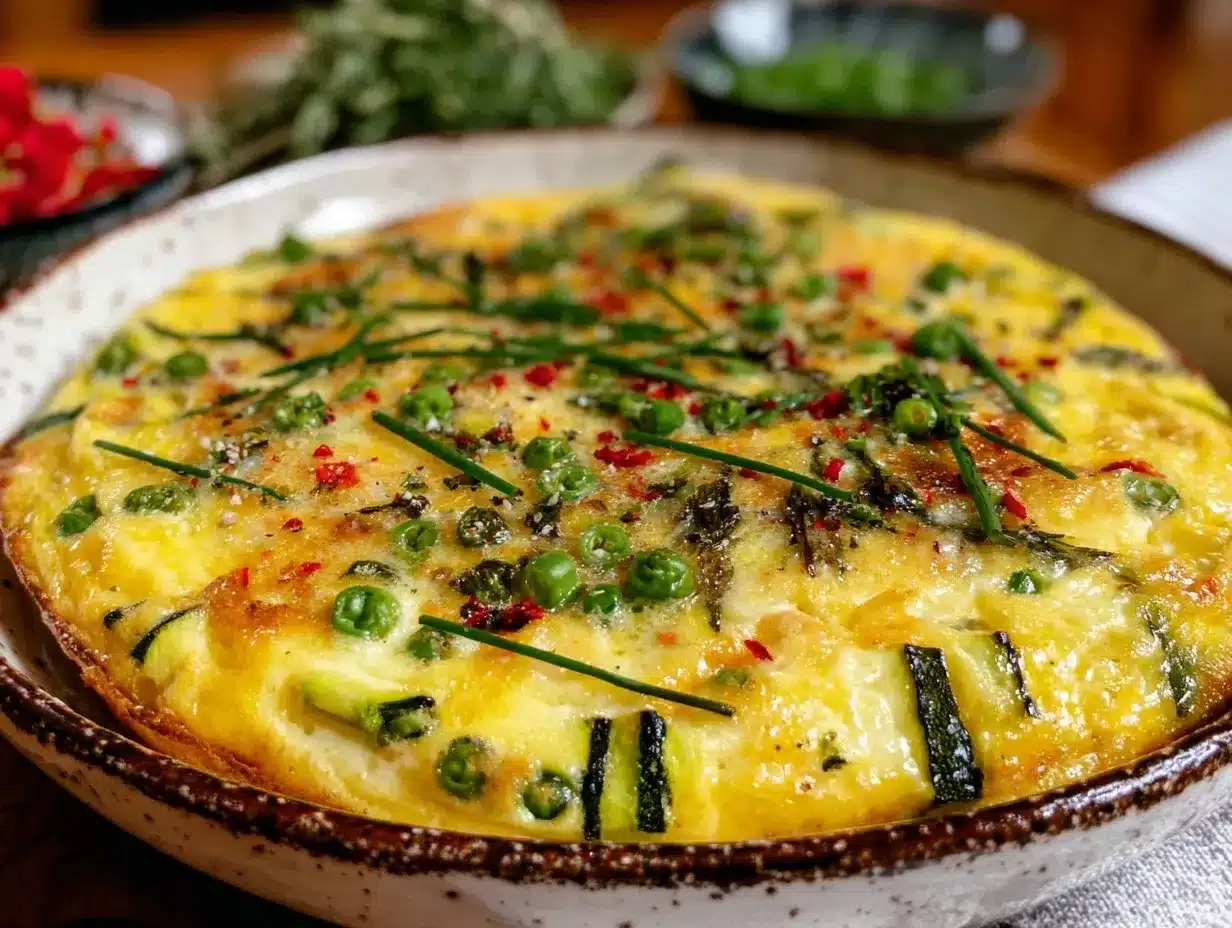
- Preheat your oven to 375°F (190°C). This ensures even cooking and a golden top. Plan to bake for about 12-15 minutes.
- Prepare the vegetables: Trim and cut 1 cup of fresh asparagus into 1-inch pieces. Shell ¾ cup of fresh peas or thaw frozen peas. Finely chop 1 medium shallot and set aside.
- Heat 1 tablespoon of olive oil over medium heat in your oven-safe skillet. Add the shallots and sauté for 2-3 minutes until translucent and fragrant. Add asparagus and peas, cooking for another 4-5 minutes until just tender but still bright green. Season lightly with salt and pepper.
- In a mixing bowl, whisk together 8 large eggs with ¼ cup whole milk, 2 tablespoons chopped chives, 1 tablespoon chopped fresh tarragon, salt, and pepper. Make sure the eggs are well combined and slightly frothy. Stir in ¼ cup grated Parmesan if using.
- Pour the egg mixture over the sautéed vegetables in the skillet. Gently stir once to distribute veggies evenly. Let cook undisturbed for 2-3 minutes on the stovetop over medium-low heat — edges should begin setting but center still jiggles slightly.
- Transfer the skillet to the preheated oven and bake for 12-15 minutes, or until the frittata is puffed, set, and lightly golden on top. You can test doneness by inserting a knife in the center — it should come out clean.
- Remove from oven and let cool for 5 minutes. This resting helps the frittata finish setting and makes slicing easier. Serve warm or at room temperature.
Tips: Keep an eye during the last few minutes of baking to avoid drying out. If you notice browning too fast, tent lightly with foil. If the veggies seem watery, you can pat them dry before adding eggs.
Cooking Tips & Techniques for a Perfect Spring Vegetable Frittata
Here’s the thing about frittatas: timing and temperature are your best friends. Cooking the veggies first ensures they don’t release water into the eggs, which can make the frittata soggy. Also, letting the eggs set slightly on the stove before baking helps develop a creamier texture.
One mistake I made early on was overcooking the eggs; they turned rubbery and dry. What helped? Lowering the stovetop heat and watching the oven closely. Honestly, ovens vary—take the frittata out just as it’s set to avoid that dreaded dry edge.
Multitasking tip: While the frittata bakes, you can prep a simple salad or set the table. Saves time and makes the meal feel complete.
Don’t rush the resting period after baking—it lets the eggs finish cooking gently and makes serving a breeze. If the top seems undercooked but edges are done, a quick broil for 1-2 minutes can add a nice golden finish.
Variations & Adaptations
- Vegetarian to Vegan: Swap eggs for a chickpea flour batter mixed with water and a pinch of turmeric for color. Use dairy-free milk and omit cheese.
- Seasonal Twists: In summer, replace peas and asparagus with fresh cherry tomatoes and zucchini ribbons for a bright, juicy flavor.
- Extra Protein: Add cooked, diced chicken or smoked salmon for a heartier meal. Just fold it in with the veggies before adding the eggs.
- Herb Swaps: Use basil and parsley instead of tarragon and chives for a different herbal profile.
- Low-Fat Option: Use egg whites or a mix of whole eggs and whites, and swap cream for low-fat milk.
Once, I tried adding crumbled goat cheese with thyme instead of Parmesan and tarragon. It was unexpectedly delicious—sharp, creamy, and earthy. Don’t be afraid to experiment a bit!
Serving & Storage Suggestions
This fresh spring vegetable frittata with herbs shines when served warm, straight from the pan, but it’s also delicious at room temperature. Slice it into wedges and pair with a crisp green salad dressed lightly in lemon vinaigrette for a fresh meal.
Leftovers keep well in the fridge for up to 3 days, covered tightly with plastic wrap or in an airtight container. Reheat gently in a microwave or oven at 300°F (150°C) for 10-12 minutes to avoid drying out.
You can freeze individual slices wrapped in foil and placed in a freezer-safe bag for up to 2 months. Thaw overnight in the fridge and reheat as usual.
Fun fact: the flavors of the herbs mellow and deepen after a day, making the frittata taste even better the next day—if you don’t eat it all right away!
Nutritional Information & Benefits
This fresh spring vegetable frittata with herbs is a nutrient-packed dish, providing approximately per serving (based on 6 servings):
| Calories | 180 |
|---|---|
| Protein | 14g |
| Fat | 12g |
| Carbohydrates | 6g |
| Fiber | 2g |
Eggs provide high-quality protein and essential vitamins like B12 and D. Asparagus and peas add fiber, antioxidants, and vitamins A and C. The fresh herbs contribute micronutrients and a burst of flavor without added sodium.
This recipe is naturally gluten-free and can be adapted for low-carb or dairy-free diets easily. It’s a wholesome way to enjoy spring’s freshest produce while keeping meals light yet satisfying.
Conclusion
This fresh spring vegetable frittata with herbs is proof that simple ingredients, treated with a little care, can make for an unforgettable meal. It’s quick enough for weekday breakfasts but elegant enough to serve when friends drop by unexpectedly. I love how the bright veggies and fragrant herbs come together in such a fuss-free way.
Feel free to tweak the herbs or veggies based on what’s fresh or what you enjoy most. And hey, if you try adding your own twist, drop a comment—I’d love to hear your version!
Give this recipe a shot and see how a humble frittata can bring a little springtime joy to your table.
FAQs About Fresh Spring Vegetable Frittata with Herbs
Can I make this frittata ahead of time?
Yes! You can prepare the frittata and refrigerate it overnight. Reheat gently in the oven or microwave before serving.
What if I don’t have fresh tarragon or chives?
Substitute with fresh parsley and basil, or use dried herbs—just reduce the amount by half as dried herbs are more concentrated.
Can I add cheese to this frittata?
Absolutely! Parmesan, goat cheese, or feta work well. Add about ¼ cup crumbled or grated cheese to the egg mixture.
Is this recipe suitable for a gluten-free diet?
Yes, it naturally contains no gluten. Just double-check any added ingredients like cheese for gluten-free labels if needed.
How do I know when the frittata is fully cooked?
Look for a puffed, golden top and edges that are set. Insert a knife into the center; if it comes out clean, it’s done.
Pin This Recipe!
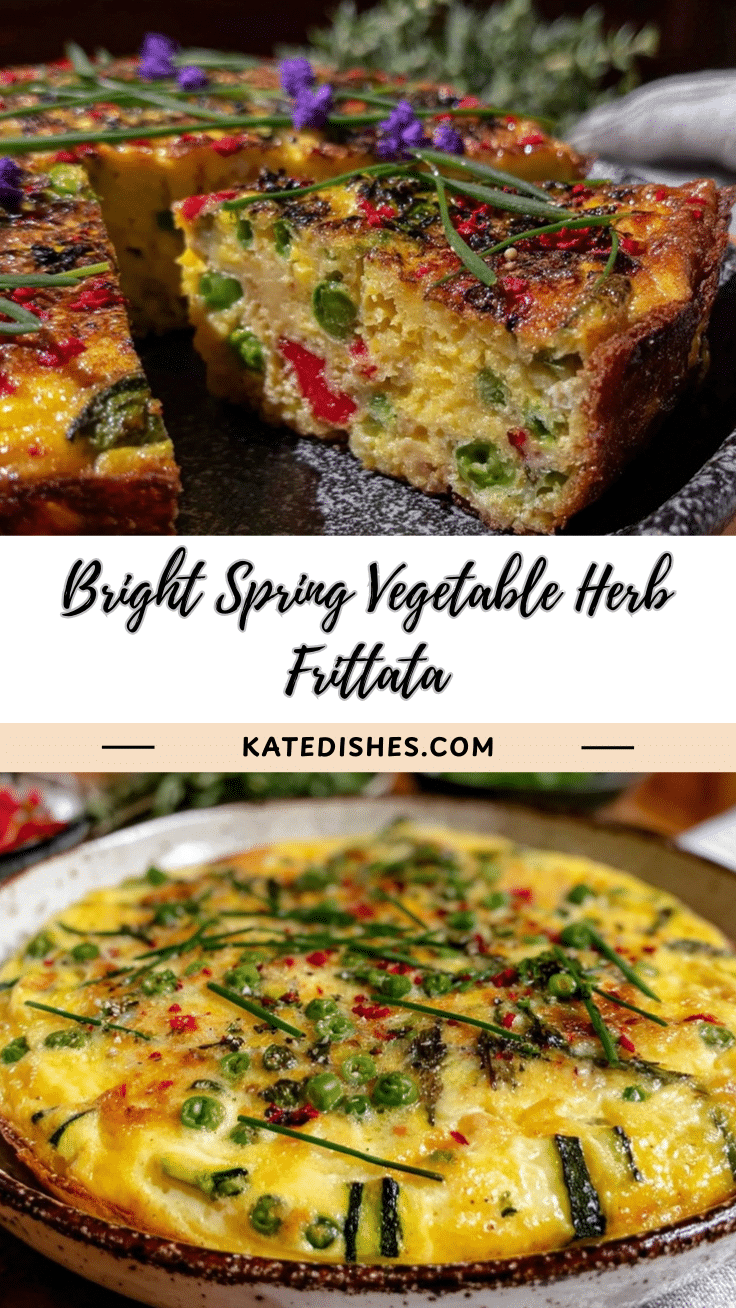
Fresh Spring Vegetable Frittata with Herbs

A quick and easy frittata featuring fresh spring vegetables and herbs, perfect for a light yet satisfying meal that celebrates the season’s bounty.
- Prep Time: 10 minutes
- Cook Time: 20 minutes
- Total Time: 30 minutes
- Yield: 6 servings 1x
- Category: Main Course
- Cuisine: American
Ingredients
- 8 large eggs (room temperature for best fluffiness)
- 1 cup fresh asparagus, trimmed and cut into 1-inch pieces
- 3/4 cup fresh peas (shell and use fresh if possible; frozen works too)
- 1 medium shallot, finely chopped
- 2 tbsp chopped fresh chives
- 1 tbsp fresh tarragon, chopped
- 1/4 cup whole milk or cream (dairy-free alternative if preferred)
- 2 tbsp olive oil (extra virgin recommended)
- Salt and freshly ground black pepper to taste
- 1/4 cup grated Parmesan cheese (optional)
Instructions
- Preheat your oven to 375°F (190°C).
- Prepare the vegetables: trim and cut asparagus into 1-inch pieces, shell peas or thaw frozen peas, finely chop shallot.
- Heat 1 tablespoon olive oil over medium heat in an oven-safe skillet. Add shallots and sauté for 2-3 minutes until translucent and fragrant. Add asparagus and peas, cook for 4-5 minutes until tender but still bright green. Season lightly with salt and pepper.
- In a mixing bowl, whisk together eggs, milk, chopped chives, chopped tarragon, salt, and pepper until well combined and slightly frothy. Stir in Parmesan cheese if using.
- Pour the egg mixture over the sautéed vegetables in the skillet. Gently stir once to distribute veggies evenly. Cook undisturbed for 2-3 minutes on medium-low heat until edges begin setting but center still jiggles slightly.
- Transfer the skillet to the preheated oven and bake for 12-15 minutes, or until the frittata is puffed, set, and lightly golden on top. Test doneness by inserting a knife in the center; it should come out clean.
- Remove from oven and let cool for 5 minutes before slicing and serving warm or at room temperature.
Notes
Use fresh tarragon for a delicate anise flavor. Frozen peas can be used if fresh are unavailable; thaw before use. To avoid sogginess, cook vegetables first to reduce moisture. Let the frittata rest after baking to finish setting. Tent with foil if browning too fast. For vegan adaptation, use silken tofu with kala namak and nutritional yeast.
Nutrition
- Serving Size: 1 wedge (1/6 of frit
- Calories: 180
- Fat: 12
- Carbohydrates: 6
- Fiber: 2
- Protein: 14
Keywords: spring vegetable frittata, fresh herbs, asparagus, peas, easy brunch recipe, healthy egg dish, vegetarian frittata, gluten-free