“You won’t believe this,” my coworker whispered over our lunch break last Thursday, sliding a container across the table. Inside was a jumble of sizzling beef, vibrant veggies, and rice that looked like it belonged in a Korean street market, not a cubicle. Honestly, I was skeptical—Korean BBQ beef bowls? On a busy workday? But one bite and I was hooked.
Now, I’m not usually one to get swept up in quick, weeknight meals, but this recipe has a way of sneaking up on you. The sweet, savory, and slightly spicy flavors meld perfectly with tender beef and crisp veggies. The whole thing came together while I was juggling emails, and well, let’s just say my kitchen looked like a tornado hit it—but in a good way.
Maybe you’ve been there too, craving something tasty but needing it ASAP. These easy flavor-packed Korean BBQ beef bowls fit that exact bill. It’s the kind of meal that feels special without hours of fuss. Plus, it’s a hit whether you’re solo, feeding picky eaters, or trying to impress guests who think you spent all day in the kitchen. Let me tell you, this recipe stayed with me because it perfectly balances bold taste with simple prep—something I always appreciate on a chaotic weekday.
Why You’ll Love This Recipe
After testing a dozen variations and tweaking marinade times, I can confidently say this Korean BBQ beef bowl recipe is a keeper. It hits all the right notes for busy cooks and flavor seekers alike. Here’s why it’s become my go-to:
- Quick & Easy: Ready in under 30 minutes, so it works beautifully for weeknight dinners or last-minute meal preps.
- Simple Ingredients: No need to hunt down exotic items; everything’s either a pantry staple or available at your local grocery store.
- Perfect for Any Occasion: Whether it’s a casual dinner, a potluck, or a laid-back weekend lunch, these bowls deliver satisfaction every time.
- Crowd-Pleaser: Kids love the sweet-savory combo, and adults appreciate the depth of flavor and fresh veggies.
- Unbelievably Delicious: The marinade’s balance of garlic, ginger, and a touch of heat gives the beef that unforgettable taste you’ll want to make again and again.
What makes this recipe stand out is the marinade technique—I blend soy sauce with brown sugar and a hint of sesame oil, then let the beef soak up all those flavors just long enough for maximum tenderness. Plus, the quick stir-fry method keeps the beef juicy and the veggies crisp. It’s comfort food with a Korean twist that’s approachable and reliable.
Honestly, it’s the kind of dish that makes you close your eyes after the first bite and say, “Yep, this is good.” Whether you’re cooking for yourself or a crowd, it turns simple ingredients into a bowl full of joy.
What Ingredients You Will Need
This recipe uses straightforward, wholesome ingredients to deliver bold Korean BBQ flavors and satisfying textures without any fuss. Most are pantry staples, and substitutions are easy if you need to swap or adapt.
- Beef: 1 lb (450 g) flank steak or sirloin, thinly sliced against the grain (choose well-marbled for tenderness)
- Soy Sauce: ¼ cup (60 ml) low-sodium soy sauce (I prefer Kikkoman for consistent flavor)
- Brown Sugar: 2 tablespoons (adds just the right sweetness)
- Garlic: 3 cloves, minced (fresh is best for punchy flavor)
- Ginger: 1 tablespoon, finely grated (gives a warm, zesty kick)
- Sesame Oil: 1 tablespoon (toasty depth and aroma)
- Rice Vinegar: 1 tablespoon (balances the sweetness)
- Red Pepper Flakes: ½ teaspoon (adjust to taste for heat)
- Green Onions: 3 stalks, sliced thinly (for freshness and color)
- Vegetables: 1 cup shredded carrots and 1 cup thinly sliced bell peppers (adds crunch and color)
- Cooked Rice: 3 cups (white, brown, or jasmine rice all work well)
- Sesame Seeds: 1 tablespoon, toasted (for garnish and nuttiness)
Substitution tips: Use tamari instead of soy sauce for a gluten-free option. If you don’t have sesame oil, a neutral oil with toasted sesame seeds sprinkled on top works fine. I often add a splash of fish sauce for a savory boost, but it’s optional.
Equipment Needed
- Nonstick Skillet or Cast Iron Pan: Essential for quick, even cooking of the beef without sticking. I’ve used both, and cast iron gives a great sear.
- Mixing Bowls: For marinating the beef and tossing the veggies. A medium bowl works perfectly.
- Sharp Knife: For slicing the beef thinly and chopping veggies. A good chef’s knife makes a huge difference.
- Cutting Board: Use a sturdy one to keep things safe and tidy.
- Measuring Cups and Spoons: For precise ingredient amounts. It’s worth having a reliable set.
- Rice Cooker or Pot: To cook your rice. Rice cookers make life easier, but a pot with a tight lid works fine too.
If you don’t have a cast iron pan, a heavy-bottomed skillet will do. For marinating, I often just use a zip-top bag to save on dishes. Also, keeping a splatter guard handy can save cleanup when stir-frying.
Preparation Method
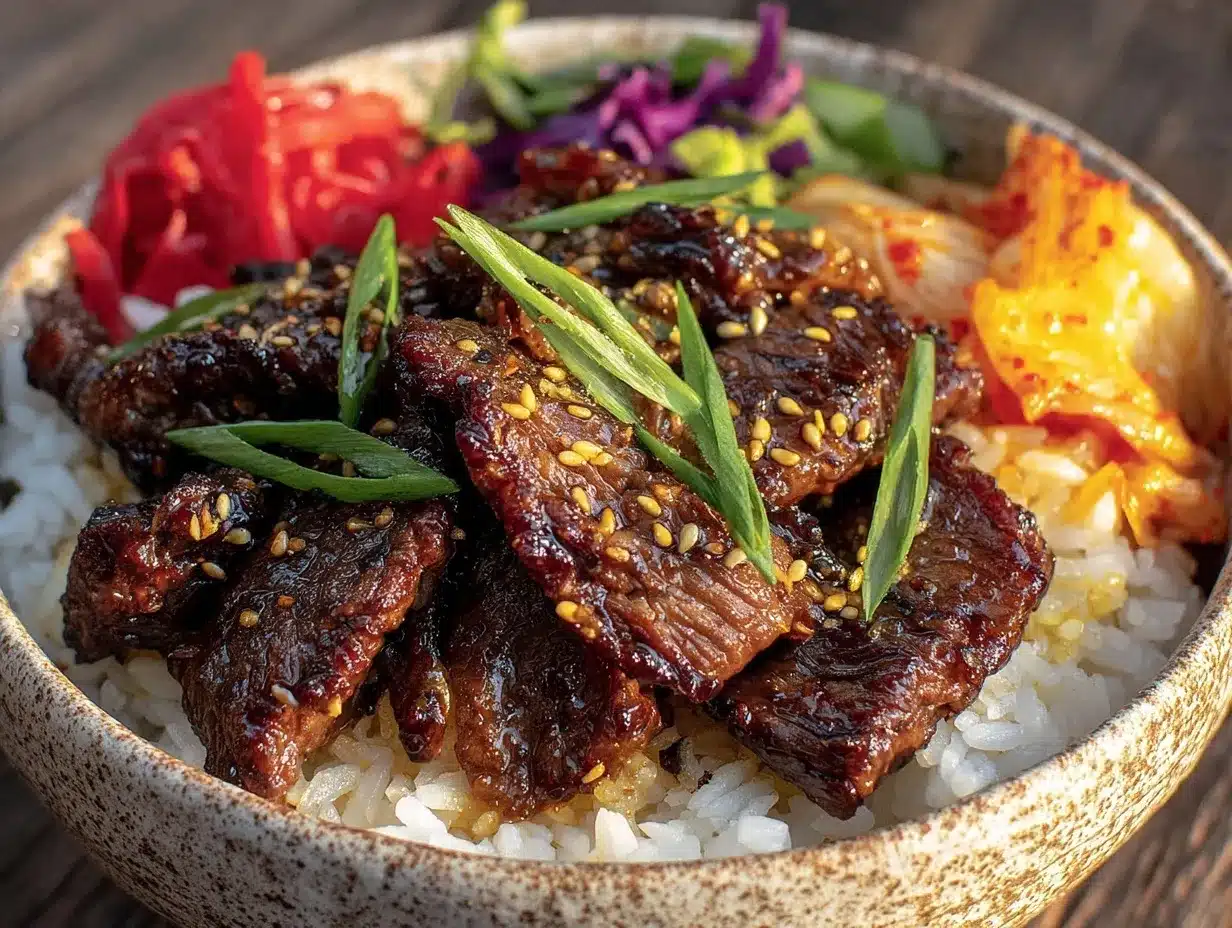
- Slice the Beef: Using a sharp knife, cut 1 lb (450 g) of flank steak against the grain into thin strips about ¼ inch (0.6 cm) thick. This helps keep the beef tender.
- Make the Marinade: In a medium bowl, whisk together ¼ cup (60 ml) soy sauce, 2 tablespoons brown sugar, 3 minced garlic cloves, 1 tablespoon grated ginger, 1 tablespoon sesame oil, 1 tablespoon rice vinegar, and ½ teaspoon red pepper flakes. The sauce should taste balanced—sweet and savory with a touch of heat.
- Marinate the Beef: Add the sliced beef to the marinade and toss to coat evenly. Cover and refrigerate for at least 15 minutes, up to 1 hour. Don’t skip this step—it’s what infuses the flavor and tenderizes the meat.
- Prepare the Veggies: While the beef marinates, thinly slice 1 cup of bell peppers and shred 1 cup of carrots. Slice 3 green onions thinly, separating white and green parts.
- Cook the Rice: Prepare 3 cups cooked rice according to package instructions. Jasmine or short-grain rice works best for that sticky, fluffy texture.
- Cook the Beef: Heat a large skillet over medium-high heat until hot. Add the marinated beef in a single layer (cook in batches if needed to avoid crowding). Stir-fry for 3–4 minutes until browned and just cooked through—don’t overcook or it gets tough.
- Stir-Fry the Veggies: Remove the beef and set aside. In the same skillet, add a small splash of oil if needed and sauté the sliced bell peppers, shredded carrots, and the white parts of green onions for 2–3 minutes until slightly softened but still crisp.
- Combine and Finish: Return the beef to the skillet, toss everything together for another minute to combine flavors. Turn off heat and sprinkle with the green parts of the green onions and 1 tablespoon toasted sesame seeds.
- Assemble the Bowls: Divide the cooked rice between bowls and top with the beef and veggie mixture. Serve immediately for best texture and flavor.
Pro tip: If you want an extra kick, stir in some gochujang (Korean chili paste) into the marinade or drizzle on top before serving. Just start with a teaspoon and adjust to your heat preference.
Cooking Tips & Techniques
Getting Korean BBQ beef bowls just right takes a few insider moves.
- Slice Against the Grain: This is a game-changer. Cutting the beef across the muscle fibers makes it tender and easier to chew.
- Don’t Overcrowd the Pan: Overloading the skillet steams the beef instead of searing it. Cook in batches for a nice caramelization.
- Marinate Time Matters: Even 15 minutes makes a big difference, but longer (up to an hour) helps the flavors soak in and tenderizes the meat.
- Use Fresh Ingredients: Fresh garlic and ginger bring brightness that pre-minced versions just can’t match.
- Control the Heat: Start medium-high but reduce if things start to burn. You want a good sear, not char.
- Multitasking: Prep veggies while the beef marinates and rice cooks. This saves time and keeps everything fresh.
Honestly, the first time I made this, I forgot to slice the beef thinly and ended up with chewy chunks. Lesson learned: thin slices are key for that melt-in-your-mouth feel.
Variations & Adaptations
Here are some ways to make these Korean BBQ beef bowls your own:
- Vegetarian Version: Swap beef for marinated tofu or tempeh. Press the tofu well, then marinate and cook as you would the beef.
- Spicy Upgrade: Add extra gochujang or fresh sliced chili peppers to the marinade if you love heat.
- Low-Carb Option: Serve over cauliflower rice or spiralized zucchini noodles instead of traditional rice.
- Seasonal Veggies: Try adding snap peas, mushrooms, or baby spinach during the stir-fry step for variety.
- Sweet Twist: Mix in a tablespoon of honey or maple syrup to the marinade for a richer sweetness.
Personally, I once tried using thinly sliced pork shoulder instead of beef, and it was a pleasant surprise—juicy and flavorful, just a bit milder. It’s worth experimenting depending on what’s in your fridge.
Serving & Storage Suggestions
These Korean BBQ beef bowls are best enjoyed hot and fresh, straight from the pan. Serve them right away to savor the tender beef and crisp veggies at their peak.
For presentation, garnish with extra sliced green onions and a sprinkle of toasted sesame seeds. A side of kimchi or quick pickled cucumbers pairs beautifully, adding tang and crunch.
Leftovers keep well in an airtight container in the refrigerator for up to 3 days. When reheating, cover loosely with foil and warm gently in a skillet or microwave to avoid drying out the beef.
Flavors tend to deepen overnight, so sometimes I make a batch ahead and find it tastes even better the next day. Just remember to add fresh garnishes after reheating for that bright pop.
Nutritional Information & Benefits
Each serving of these Korean BBQ beef bowls (makes about 4 servings) provides roughly:
| Calories | 450-500 kcal |
|---|---|
| Protein | 35 g |
| Carbohydrates | 40 g |
| Fat | 15 g |
| Fiber | 4 g |
The beef provides high-quality protein and iron, while the veggies add fiber, vitamins, and antioxidants. Using lean cuts and controlling sugar in the marinade helps keep it balanced. For gluten-free diets, swapping soy sauce for tamari makes this recipe safe and just as tasty.
From a wellness perspective, this bowl hits the sweet spot between indulgence and nutrition, making it a smart choice for a satisfying meal that doesn’t leave you feeling heavy.
Conclusion
If you’re craving a meal that’s fast, flavorful, and fuss-free, these easy flavor-packed Korean BBQ beef bowls deserve a spot in your recipe rotation. The balance of savory, sweet, and spicy flavors with tender beef and crisp veggies makes it a meal you’ll want to come back to.
Feel free to adjust the heat, veggies, or protein to fit your taste buds and pantry. I love how adaptable this recipe is—it’s never the same twice, yet always hits the mark.
Give it a try, and let me know how you make it your own. Share your tweaks, questions, or triumphs in the comments below—I’d love to hear from you! Here’s to easy dinners that taste like a treat.
FAQs
Can I use a different cut of beef for this recipe?
Yes! Flank steak or sirloin are ideal for their tenderness and flavor, but you can also try skirt steak or ribeye. Just slice thinly against the grain for the best results.
How long can I marinate the beef?
Anywhere from 15 minutes to 1 hour works well. Longer marinating doesn’t hurt but avoid going beyond 2 hours to prevent the meat from becoming mushy.
Can I make this recipe ahead of time?
Absolutely! You can marinate the beef and prep veggies a few hours ahead or even the night before. Cook just before serving for best texture.
What if I don’t have sesame oil?
You can substitute with a neutral oil like vegetable or canola, then sprinkle toasted sesame seeds on top to keep that signature nutty flavor.
Is this recipe gluten-free?
It can be! Use tamari or a gluten-free soy sauce to replace regular soy sauce, and double-check any other sauces or ingredients for gluten content.
Pin This Recipe!
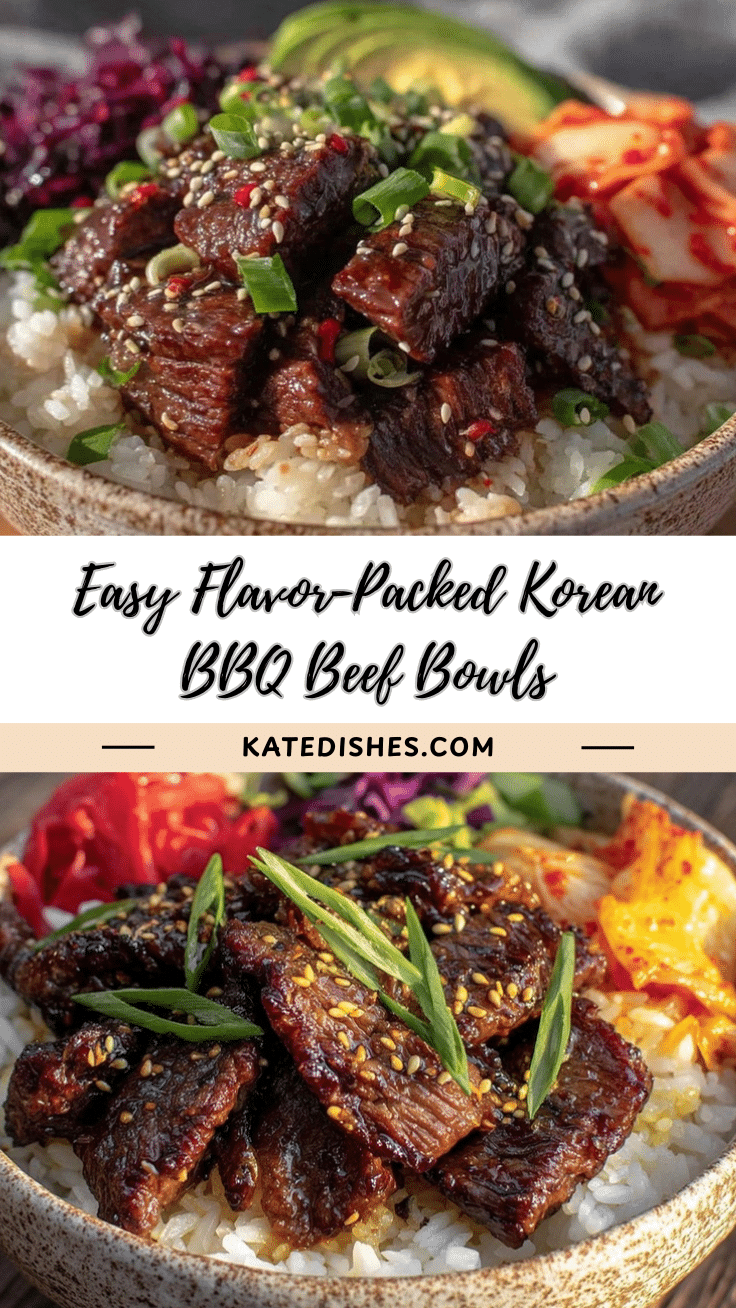
Easy Flavor-Packed Korean BBQ Beef Bowls Recipe for Perfect Weeknight Dinners

This quick and easy Korean BBQ beef bowl recipe combines sweet, savory, and slightly spicy flavors with tender beef and crisp veggies, perfect for busy weeknight dinners.
- Prep Time: 15 minutes
- Cook Time: 15 minutes
- Total Time: 30 minutes
- Yield: 4 servings 1x
- Category: Main Course
- Cuisine: Korean
Ingredients
- 1 lb (450 g) flank steak or sirloin, thinly sliced against the grain
- ¼ cup (60 ml) low-sodium soy sauce
- 2 tablespoons brown sugar
- 3 cloves garlic, minced
- 1 tablespoon finely grated ginger
- 1 tablespoon sesame oil
- 1 tablespoon rice vinegar
- ½ teaspoon red pepper flakes
- 3 stalks green onions, sliced thinly
- 1 cup shredded carrots
- 1 cup thinly sliced bell peppers
- 3 cups cooked rice (white, brown, or jasmine)
- 1 tablespoon toasted sesame seeds
Instructions
- Slice the beef against the grain into thin strips about ¼ inch thick.
- In a medium bowl, whisk together soy sauce, brown sugar, garlic, ginger, sesame oil, rice vinegar, and red pepper flakes to make the marinade.
- Add the sliced beef to the marinade, toss to coat evenly, cover, and refrigerate for at least 15 minutes up to 1 hour.
- While the beef marinates, thinly slice bell peppers and shred carrots. Slice green onions, separating white and green parts.
- Cook 3 cups of rice according to package instructions.
- Heat a large skillet over medium-high heat until hot. Add marinated beef in a single layer and stir-fry for 3–4 minutes until browned and cooked through. Cook in batches if needed.
- Remove beef and set aside. In the same skillet, add a small splash of oil if needed and sauté bell peppers, carrots, and white parts of green onions for 2–3 minutes until slightly softened but still crisp.
- Return beef to skillet, toss everything together for another minute to combine flavors. Turn off heat and sprinkle with green parts of green onions and toasted sesame seeds.
- Divide cooked rice between bowls and top with beef and veggie mixture. Serve immediately.
Notes
Slice beef thinly against the grain for tenderness. Do not overcrowd the pan when cooking beef to ensure proper searing. Marinate beef for at least 15 minutes for best flavor and tenderness. Use fresh garlic and ginger for best taste. Optional: add gochujang for extra heat. Substitute tamari for soy sauce to make gluten-free. Leftovers keep well refrigerated for up to 3 days.
Nutrition
- Serving Size: 1 bowl (approximatel
- Calories: 475
- Sugar: 8
- Sodium: 700
- Fat: 15
- Saturated Fat: 4
- Carbohydrates: 40
- Fiber: 4
- Protein: 35
Keywords: Korean BBQ, beef bowls, weeknight dinner, quick recipe, stir-fry, easy meal, Korean cuisine