“Hand me that wok,” my neighbor chuckled one humid Thursday evening as we both eyed the cluttered counters of my tiny kitchen. I was halfway through what I thought would be a simple stir-fry when she started tossing ingredients together, casually whipping up the most delicious, tangy Pad Thai with shrimp I’d ever tasted. Honestly, I wasn’t expecting much—I mean, how different could Pad Thai be from what I’d made before? But within minutes, the sizzle, the vibrant colors, and the punch of flavors made me forget my messy counters and the cracked bowl I’d just dropped.
That night stuck with me. Maybe you’ve been there too—stuck in a cooking rut or scrambling for a quick dinner that doesn’t taste like takeout disappointment. This Easy Tangy Pad Thai with Shrimp isn’t just fast; it’s a little joyful rebellion against boring meals. The balance of sweet, sour, and salty flavors hits you in the best way, and the shrimp adds that perfect briny touch that feels special but isn’t fussy.
It’s funny how a casual visit and a shared meal can lead to a recipe that keeps showing up on my weeknight menu. You know that feeling when you find a dish that’s quick, bright, and just hits the spot? Yeah, that’s this one. So, if you’re hunting for a weeknight meal that’s both speedy and packs a flavorful punch, stick around—I promise this Pad Thai will be your new go-to.
Why You’ll Love This Recipe
After countless tries and tweaking, this Easy Tangy Pad Thai with Shrimp recipe has become a trusted friend in my kitchen. Here’s why it’s worth your time:
- Quick & Easy: Ready in under 30 minutes, it’s perfect when time is tight but you want a meal that feels homemade.
- Simple Ingredients: Most of what you need is probably already in your pantry or local grocery store—no exotic hunting required.
- Perfect for Weeknight Dinners: It’s light enough for a casual meal but satisfying enough to keep everyone happy after a busy day.
- Crowd-Pleaser: Kids and adults alike tend to ask for seconds, thanks to the tangy sauce and tender shrimp combo.
- Flavor & Texture Harmony: The chewy rice noodles, crunchy peanuts, fresh bean sprouts, and zesty sauce create a symphony of tastes and textures.
This recipe stands out because of its balanced sauce—tangy but not overpowering, with a subtle sweetness that complements the shrimp perfectly. I’ve tested it with different brands of tamarind paste and fish sauce (I personally like Thai Kitchen for an authentic kick). The key is getting that zing just right, which makes all the difference between a “meh” Pad Thai and one you’ll remember.
Honestly, this isn’t just another Pad Thai recipe floating around online; it’s one that’s been tried, tweaked, and loved in my home. It’s like comfort food with a bright twist, and it’s the kind of dish that makes you pause mid-bite and think, “Yep, I’m making this again soon.”
What Ingredients You Will Need
This recipe uses straightforward, wholesome ingredients to create a bold flavor profile and satisfying texture without fuss. Most items are pantry staples or easy finds at any supermarket.
- Rice noodles: 8 oz (225 g) flat rice noodles, soaked or boiled according to package instructions (I prefer the slightly chewy texture of Thai-style noodles)
- Raw shrimp: 12 oz (340 g), peeled and deveined (medium-sized works best for even cooking)
- Eggs: 2 large, lightly beaten (adds protein and richness)
- Garlic: 3 cloves, minced (for that aromatic base)
- Green onions: 3 stalks, sliced (for freshness and mild onion flavor)
- Bean sprouts: 1 cup (adds crunch and freshness)
- Peanuts: ½ cup, chopped (use unsalted roasted peanuts like Planters for best crunch)
- Fresh lime: 1, cut into wedges (for serving and extra tang)
- Fresh cilantro: A handful, chopped (optional but highly recommended for garnish)
For the Tangy Sauce:
- 3 tablespoons tamarind paste (look for well-known brands like Thai Kitchen; this brings the signature tang)
- 3 tablespoons fish sauce (don’t skip this; it adds depth and umami)
- 2 tablespoons palm sugar or brown sugar (balances the tang with sweetness)
- 1 tablespoon soy sauce (adds saltiness and color)
- 1 teaspoon chili flakes (optional, for a gentle heat)
Ingredient tips: If you can’t find tamarind paste, a mix of lime juice and a touch of brown sugar can work in a pinch, though the flavor won’t be quite the same. For a gluten-free version, ensure your soy sauce is gluten-free or swap it for coconut aminos. You can swap shrimp for chicken or tofu if needed, but fresh shrimp really makes the dish sing.
Equipment Needed
- Large wok or deep skillet: A wok is ideal for quick, even cooking, but a deep skillet works fine too. I’ve used a non-stick skillet on busy nights with good results.
- Mixing bowls: For prepping sauce and tossing ingredients.
- Measuring spoons and cups: Precision helps balance the tangy sauce perfectly.
- Spatula or wooden spoon: For stirring and scrambling the eggs.
- Colander or sieve: To drain soaked noodles.
If you don’t own a wok, no worries! A sturdy large skillet with high sides will do. My budget-friendly tip: a cast iron skillet heats evenly and holds temperature well, perfect for stir-fries. Just be sure to preheat it properly to prevent sticking. For cleanup, soaking the wooden spoon and spatula immediately after cooking saves you time later.
Preparation Method
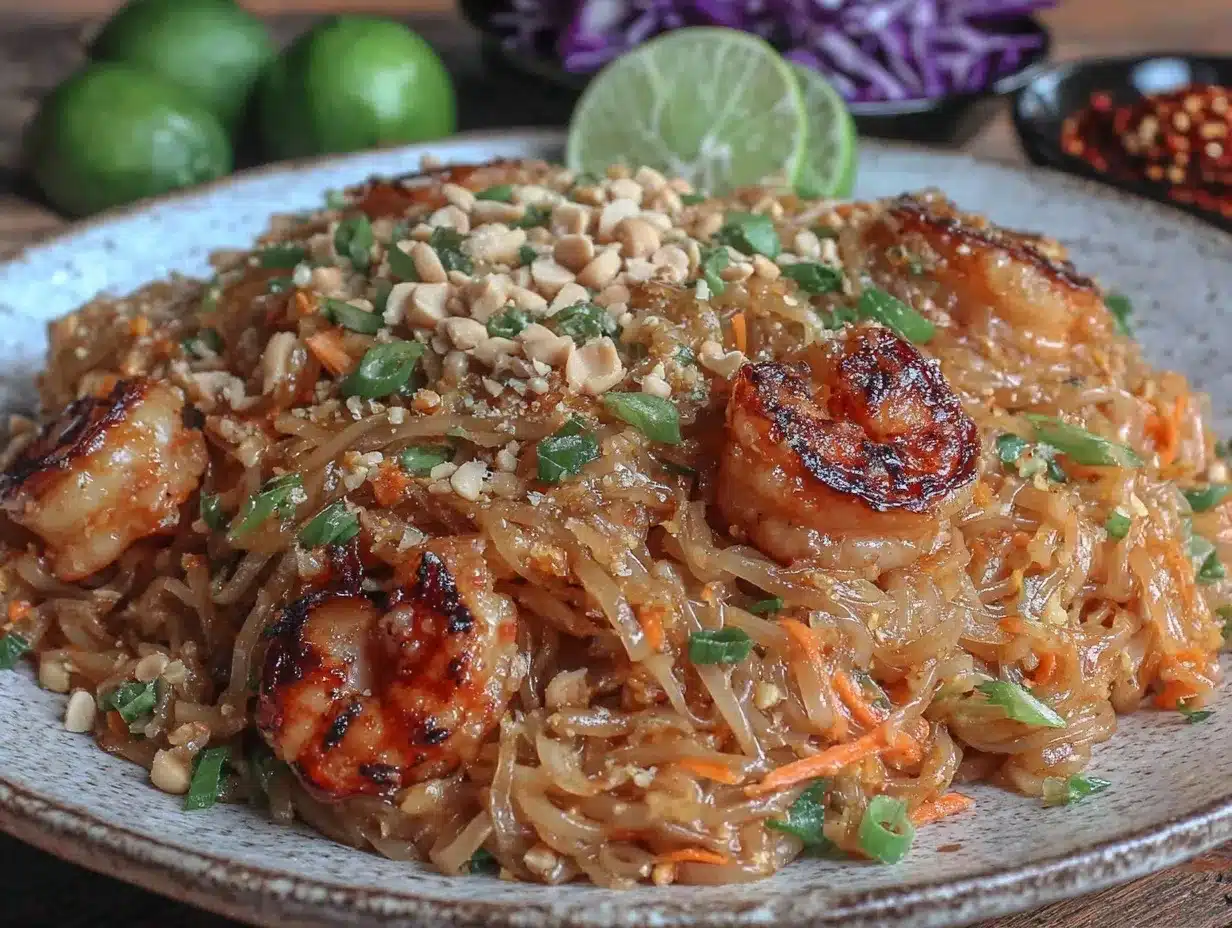
- Prepare the noodles: Soak 8 oz (225 g) of flat rice noodles in warm water for about 20 minutes until they’re pliable but still slightly firm (al dente). Drain and set aside. If using boiled noodles, cook according to package instructions, drain, and rinse with cold water to stop cooking.
- Mix the sauce: In a small bowl, combine 3 tablespoons tamarind paste, 3 tablespoons fish sauce, 2 tablespoons palm or brown sugar, 1 tablespoon soy sauce, and 1 teaspoon chili flakes (if using). Stir until sugar dissolves. Taste and adjust balance if needed—should be tangy, sweet, and salty all at once.
- Cook the shrimp: Heat 2 tablespoons vegetable oil in your wok or skillet over medium-high heat. Add 12 oz (340 g) peeled, deveined shrimp and cook for about 2 minutes per side until pink and just cooked through. Remove shrimp and set aside.
- Scramble the eggs: In the same pan, add a touch more oil if needed. Pour in the 2 beaten eggs, scramble quickly until just set but still soft. Remove and set aside with shrimp.
- Sauté aromatics: Add minced garlic (3 cloves) and sliced green onions (3 stalks) to the pan. Stir for 30 seconds until fragrant but not browned.
- Combine noodles and sauce: Add the drained noodles to the pan, pour over the prepared sauce, and toss well to coat. Stir-fry for about 2–3 minutes until noodles absorb the sauce and become tender but not mushy.
- Add shrimp and eggs: Return the cooked shrimp and scrambled eggs to the pan. Toss gently to combine and warm through.
- Finish with fresh crunch: Stir in 1 cup bean sprouts and half the chopped peanuts. Cook for another 30 seconds to keep the bean sprouts crisp.
- Serve: Plate the Pad Thai and garnish with the remaining peanuts, fresh cilantro, and lime wedges on the side for squeezing.
Pro tip: Keep your heat on medium-high but don’t rush tossing the noodles too fast or they’ll break. The smell when the sauce hits the hot pan is a telltale sign you’re on track. If your noodles stick, splash a little water or oil and loosen them gently.
Cooking Tips & Techniques
Getting Pad Thai just right takes some finesse, but here are my personal lessons from multiple kitchen trials:
- Don’t overcook noodles: They should be tender but still have a slight bite. Over-soaking or over-boiling leads to mushy Pad Thai—nobody wants that.
- Balance your sauce: Taste as you mix. Tamarind paste varies in intensity, so adjust sugar or fish sauce accordingly for that perfect tangy-sweet-salty harmony.
- High heat is your friend: A hot pan ensures quick cooking and keeps shrimp juicy instead of rubbery. But don’t burn your garlic—it turns bitter fast.
- Prep everything first: Stir-frying moves fast, so have ingredients chopped and sauces ready before heating the pan.
- Use fresh shrimp: Frozen works, but fresh gives a sweeter, more tender bite that shines in this recipe.
One time, I got distracted and overcooked the eggs—turned them rubbery instead of silky. Since then, I scramble them separately and remove quickly. Trust me, little details like that make a big difference. Also, for a smoother sauce coating, toss noodles gently instead of stirring wildly.
Variations & Adaptations
Feel free to make this recipe your own with these twists:
- Protein swaps: Replace shrimp with diced chicken breast, tofu for a vegetarian option, or thinly sliced beef for a heartier meal.
- Spice it up: Add fresh Thai chilies or a splash of Sriracha if you like your Pad Thai fiery.
- Gluten-free version: Use tamari or coconut aminos instead of soy sauce and double-check tamarind paste labels.
- Seasonal veggies: Toss in julienned carrots, bell peppers, or snow peas for extra crunch and color.
- Nut-free: Skip peanuts and use toasted sesame seeds or sunflower seeds as a crunchy alternative.
Personally, I tried adding a handful of fresh basil leaves once—surprisingly refreshing, though not traditional. It’s your kitchen; play around until you find your favorite combo.
Serving & Storage Suggestions
This Easy Tangy Pad Thai with Shrimp is best served hot, fresh from the pan. Squeeze lime wedges generously over each plate—that citrus pop is essential. For presentation, sprinkle the remaining peanuts and cilantro on top to add color and texture.
Pair it with a light cucumber salad or a cold Thai iced tea for a well-rounded meal. If you’re feeling adventurous, a side of steamed dumplings or spring rolls complements the flavors beautifully.
Leftovers can be stored in an airtight container in the fridge for up to 2 days. When reheating, add a splash of water and heat gently in a skillet over medium heat to keep the noodles from drying out. The flavors meld nicely after a day, so sometimes leftovers taste even better!
Nutritional Information & Benefits
Each serving of this Pad Thai (about 1½ cups) provides roughly:
| Nutrient | Amount |
|---|---|
| Calories | 420 kcal |
| Protein | 28 g |
| Fat | 14 g |
| Carbohydrates | 45 g |
| Fiber | 3 g |
| Sodium | 900 mg |
Shrimp is a lean protein packed with omega-3 fatty acids and essential minerals like selenium. Tamarind paste offers antioxidants and aids digestion, while peanuts contribute heart-healthy fats and a satisfying crunch. The fresh veggies add fiber and vitamins, making this dish a balanced option.
Just a heads-up: the fish sauce and soy sauce add sodium, so if you’re watching salt intake, consider reducing amounts or choosing low-sodium versions. Gluten-free folks can substitute soy sauce easily, making this recipe accessible to many diets.
Conclusion
This Easy Tangy Pad Thai with Shrimp is a weekday hero—quick to make, bursting with flavor, and just downright satisfying. It’s the kind of recipe that fits into your busy life without sacrificing deliciousness or that comforting homemade vibe. I love it because it’s forgiving, fresh, and always a crowd-pleaser whenever I serve it.
Feel free to tweak the ingredients or spice level to suit your taste buds. Maybe you’ll add more veggies, swap proteins, or make it your signature twist. Whatever you try, I’d love to hear about your versions and any tips you discover along the way.
So go ahead, give this Pad Thai a whirl. Share your experience, questions, or photos—I’m all ears! Here’s to many flavorful and stress-free dinners ahead.
FAQs
Can I make this Pad Thai vegetarian or vegan?
Absolutely! Substitute shrimp with firm tofu and use tamari or coconut aminos instead of fish sauce. Skip the eggs or use scrambled tofu for a vegan-friendly version.
What’s the best way to soak rice noodles?
Soak them in warm water (not boiling) for about 20 minutes until pliable but still a bit firm. Drain well before cooking to prevent sogginess.
Is tamarind paste hard to find?
Not really. Check the Asian or international aisle of your grocery store or a local Asian market. You can also order it online. If unavailable, mix lime juice with a small amount of brown sugar as a makeshift alternative.
Can I prepare the sauce ahead of time?
Yes, the sauce can be mixed and stored in the fridge for up to a week. Just give it a quick stir before using to recombine any settled ingredients.
How do I prevent the shrimp from becoming rubbery?
Cook shrimp quickly over medium-high heat just until pink and opaque, about 2 minutes per side. Overcooking is the main culprit behind rubbery texture.
Pin This Recipe!
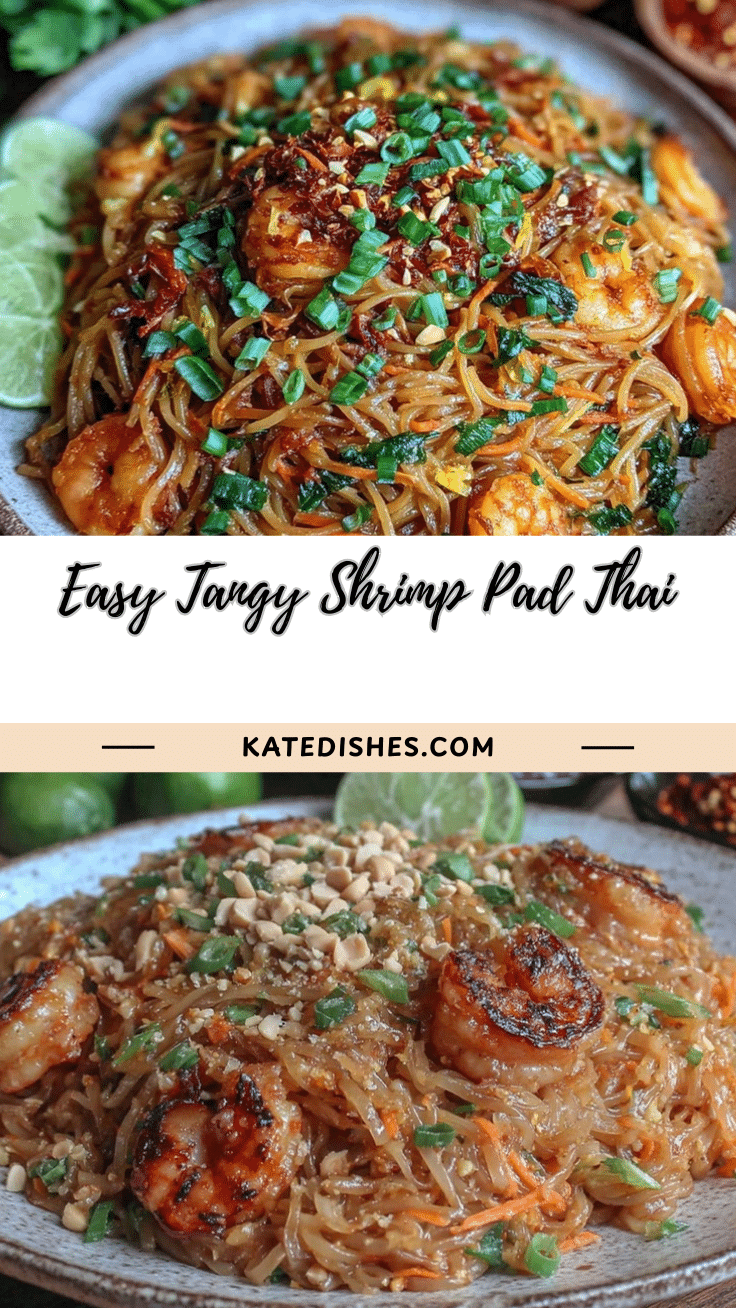
Easy Tangy Pad Thai with Shrimp
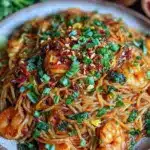
A quick and flavorful Pad Thai recipe featuring tangy sauce and tender shrimp, perfect for a delicious weeknight dinner.
- Prep Time: 25 minutes
- Cook Time: 10 minutes
- Total Time: 35 minutes
- Yield: 4 servings 1x
- Category: Main Course
- Cuisine: Thai
Ingredients
- 8 oz (225 g) flat rice noodles, soaked or boiled according to package instructions
- 12 oz (340 g) raw shrimp, peeled and deveined
- 2 large eggs, lightly beaten
- 3 cloves garlic, minced
- 3 stalks green onions, sliced
- 1 cup bean sprouts
- ½ cup peanuts, chopped (unsalted roasted)
- 1 fresh lime, cut into wedges
- A handful fresh cilantro, chopped (optional)
- 3 tablespoons tamarind paste
- 3 tablespoons fish sauce
- 2 tablespoons palm sugar or brown sugar
- 1 tablespoon soy sauce
- 1 teaspoon chili flakes (optional)
- 2 tablespoons vegetable oil (for cooking)
Instructions
- Soak 8 oz (225 g) flat rice noodles in warm water for about 20 minutes until pliable but still slightly firm. Drain and set aside. Alternatively, boil according to package instructions, then drain and rinse with cold water.
- In a small bowl, combine 3 tablespoons tamarind paste, 3 tablespoons fish sauce, 2 tablespoons palm or brown sugar, 1 tablespoon soy sauce, and 1 teaspoon chili flakes (if using). Stir until sugar dissolves and adjust to taste.
- Heat 2 tablespoons vegetable oil in a wok or large skillet over medium-high heat. Add 12 oz (340 g) peeled, deveined shrimp and cook about 2 minutes per side until pink and cooked through. Remove shrimp and set aside.
- In the same pan, add a little more oil if needed. Pour in the 2 beaten eggs and scramble quickly until just set but still soft. Remove and set aside with shrimp.
- Add minced garlic and sliced green onions to the pan. Stir for 30 seconds until fragrant but not browned.
- Add the drained noodles to the pan, pour over the prepared sauce, and toss well to coat. Stir-fry for 2–3 minutes until noodles absorb the sauce and become tender but not mushy.
- Return cooked shrimp and scrambled eggs to the pan. Toss gently to combine and warm through.
- Stir in 1 cup bean sprouts and half the chopped peanuts. Cook for another 30 seconds to keep bean sprouts crisp.
- Serve plated Pad Thai garnished with remaining peanuts, fresh cilantro, and lime wedges on the side.
Notes
Do not overcook noodles to avoid mushiness. Adjust tamarind paste and sugar to balance tangy, sweet, and salty flavors. Use fresh shrimp for best texture. Keep heat medium-high and avoid burning garlic. Prep all ingredients before cooking for smooth stir-frying.
Nutrition
- Serving Size: About 1½ cups per se
- Calories: 420
- Sodium: 900
- Fat: 14
- Carbohydrates: 45
- Fiber: 3
- Protein: 28
Keywords: Pad Thai, shrimp, quick dinner, tangy sauce, Thai recipe, weeknight meal, stir-fry