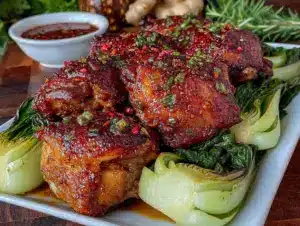
“You know that feeling when you’re craving a steak that’s just right—crispy on the outside, juicy and tender inside—but every attempt ends up either dry or overcooked? That was me last Friday night, standing in my kitchen with a ribeye that was looking rather sad. I was trying to impress my roommate, but honestly, I’d forgotten to buy a meat thermometer, and the smoke alarm was going off somewhere in the background. Somehow, that chaotic evening birthed what I now call the perfect pan-seared ribeye steak with juicy, tender crust. It wasn’t planned; it was a happy accident fueled by a slightly too-hot pan and a lot of patience.
Let me tell you, this recipe stayed with me because it captures everything I love about steak—bold flavors, a crust that crackles under your fork, and that unmistakable tenderness that makes you close your eyes after the first bite. Maybe you’ve been there—trying to get steakhouse quality at home—and trust me, this recipe is your new go-to. It’s not complicated, but it feels like a special occasion every time you make it.
Oh, and a quick heads-up: I did make a mess with some splattered oil, and the kitchen timer went off twice because I got distracted checking my phone. But hey, that’s cooking, right? What matters is the steak came out spot on, and I’ve been making it ever since.
Why You’ll Love This Recipe
This perfect pan-seared ribeye steak recipe is honestly a game-changer in my kitchen. It’s been tested over multiple attempts, refined with tips I picked up from chefs and home cooks alike, and approved by my roommate (who claims to be a steak snob). Here’s why it stands out:
- Quick & Easy: You can have this steak sizzling on your plate in under 20 minutes, perfect for busy weeknights or those last-minute dinner plans.
- Simple Ingredients: No need for exotic spices or special marinades—just quality ribeye, salt, pepper, and butter.
- Perfect for Date Nights or Casual Dinners: Feels fancy without the fuss, so it’s great when you want to impress without stress.
- Crowd-Pleaser: Whether it’s for family or friends, this steak gets rave reviews every time for its juicy, tender crust.
- Unbelievably Delicious: The combination of a perfectly seasoned crust and tender interior makes each bite a little celebration.
What makes this recipe different? It’s the attention to the searing technique and the final butter basting that seals in flavor and moisture. I learned this trick from a chef friend who swears by using a cast iron skillet and a simple garlic-herb butter baste. It’s comfort food that’s been reimagined for simplicity and maximum taste.
Honestly, it’s the kind of steak that makes you pause mid-bite and savor the moment. You can customize it easily, and it’s just as rewarding for cooks who want to feel like a pro without spending hours in the kitchen.
What Ingredients You Will Need
This recipe uses simple, wholesome ingredients to deliver bold flavor and a satisfying texture without any fuss. Most of these are pantry staples or easy to find at your local grocery store or butcher.
- Ribeye steak: 1 (12-16 oz / 340-450 g), about 1 to 1.5 inches thick (look for well-marbled cuts for best tenderness and flavor)
- Salt: Kosher salt or sea salt, for seasoning (I prefer Diamond Crystal for its texture)
- Freshly ground black pepper: coarse grind adds a nice bite
- High smoke point oil: 1-2 tablespoons, such as canola, grapeseed, or avocado oil (helps get that perfect sear without burning)
- Unsalted butter: 2 tablespoons, for basting (adds richness and a silky finish)
- Garlic cloves: 2 large, smashed (infuses the butter with a subtle aroma)
- Fresh herbs: 2-3 sprigs of thyme or rosemary (optional, but highly recommended for aromatic basting)
Tips: If you prefer a dairy-free option, swap butter with a high-quality ghee or olive oil for basting. When buying ribeye, ask your butcher for a cut with good marbling—this fat is what keeps your steak juicy. If ribeye isn’t available, go for a New York strip or sirloin, but adjust searing times slightly.
Equipment Needed
- Cast iron skillet: This is my top pick for getting that perfect crust. It holds heat evenly and is durable. If you don’t have one, use a heavy stainless steel pan.
- Tongs: For flipping the steak without piercing it.
- Instant-read meat thermometer: Helpful but not essential. It takes the guesswork out of cooking to your preferred doneness.
- Small spoon: For basting the steak with butter and herbs.
- Plate and foil: For resting the steak after cooking.
If you’re on a budget, a stainless steel pan works just fine, but you might not get quite the same sear as cast iron. Also, keep your cast iron skillet seasoned and dry to avoid rust—after cooking, wipe it clean and lightly oil it before storing.
Preparation Method
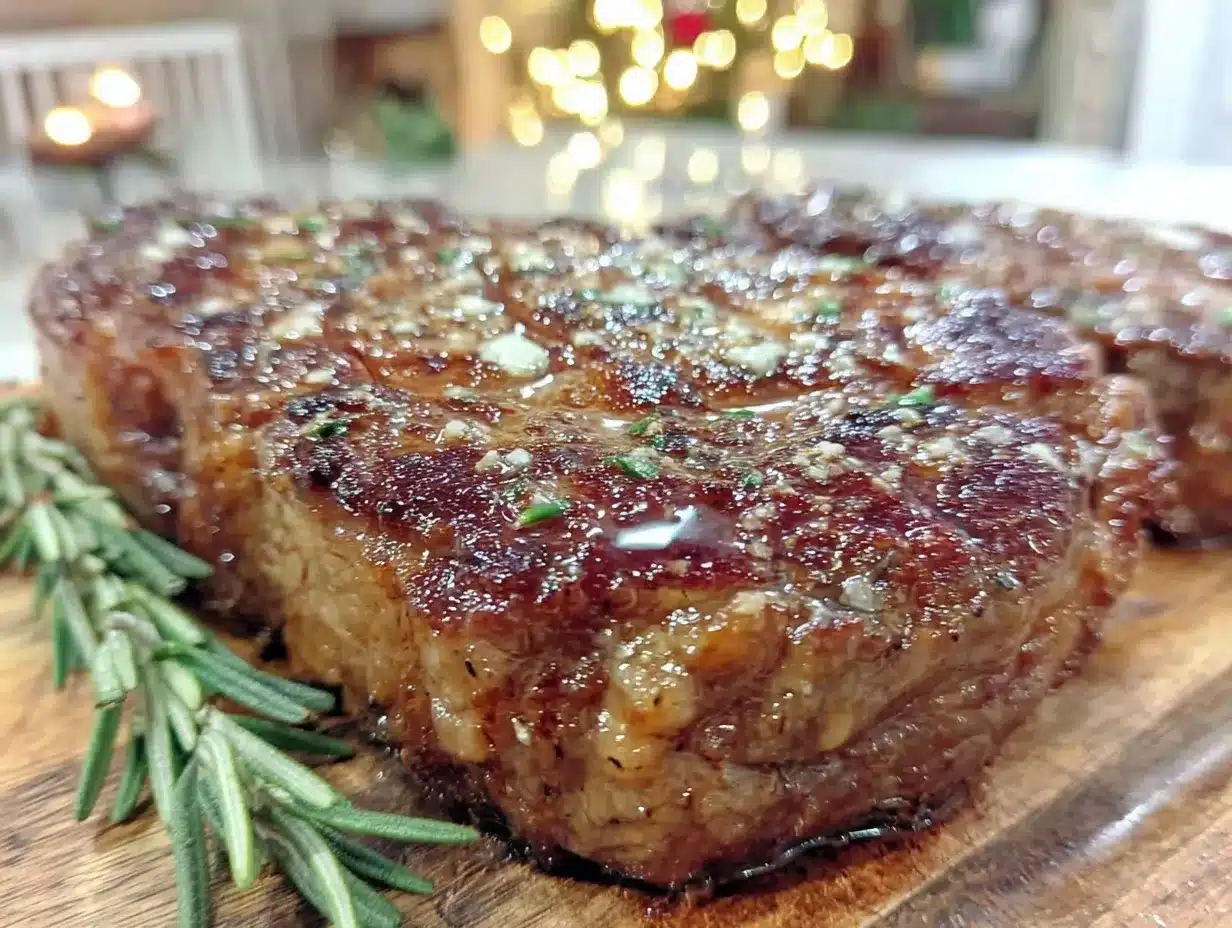
- Bring the steak to room temperature (about 20-30 minutes): Take the ribeye out of the fridge and let it rest on the counter. This helps it cook evenly and prevents the inside from being cold when the crust is perfect.
- Season generously: Pat the steak dry with paper towels. Season both sides liberally with kosher salt and freshly ground black pepper. Don’t be shy—this is key for flavor and crust.
- Heat your skillet: Place your cast iron skillet on medium-high heat and let it get very hot—about 5 minutes. You want it almost smoking but not burning. I once got distracted and overheated mine; the smoke alarm went off, so stay nearby!
- Add oil: Pour in 1-2 tablespoons of high smoke point oil and swirl to coat the bottom.
- Sear the steak: Carefully place the ribeye in the skillet. Do not move it for about 3-4 minutes (this timing works for a 1.5-inch steak). You want a deep golden-brown crust. Peek underneath gently with tongs to check color.
- Flip and sear the other side: Turn the steak over and cook for another 3 minutes.
- Add butter, garlic, and herbs: Reduce heat to medium-low. Add butter, smashed garlic, and thyme or rosemary to the pan. As the butter melts, tilt the pan slightly and spoon the butter over the steak repeatedly. This bastes the meat, locking in juices and flavor.
- Check doneness: Use an instant-read thermometer to check temperature: 125°F (52°C) for rare, 135°F (57°C) for medium-rare, 145°F (63°C) for medium. Remember, the steak will continue to cook slightly while resting.
- Rest the steak: Transfer the ribeye to a plate and tent loosely with foil. Let it rest for 5-10 minutes. This step lets the juices redistribute, making the steak juicy and tender.
- Slice and serve: Slice against the grain and pour any resting juices over the top. Enjoy immediately!
Cooking Tips & Techniques
One trick I learned is to always dry the steak before seasoning—moisture is the enemy of a good sear. If your steak steams instead of sears, the crust won’t form properly. Pat it dry with paper towels until it’s almost chalky to the touch.
Another tip: don’t overcrowd your pan! One steak at a time is best unless your skillet is large. Crowding lowers the pan temperature, leading to soggier crusts.
When basting with butter, keep the heat medium-low to avoid burning the butter. The nutty aroma that comes from butter and herbs is what makes this steak stand out. I once skipped the herbs and felt like something was missing—trust me, add them!
For timing, always rely on the thickness of the steak rather than the clock alone. A 1-inch steak cooks faster than 1.5-inch. If you don’t have a thermometer, press the steak gently with your finger: soft and squishy means rare; springy means medium; firm means well done.
Lastly, resting is non-negotiable! Cutting into a hot steak right away causes juices to spill out, leading to dryness. Patience pays off.
Variations & Adaptations
- Garlic Butter Variation: Mix minced garlic and parsley into softened butter and spread it over the steak just before serving for an extra punch of flavor.
- Spicy Crust: Add smoked paprika and cayenne pepper to your salt and pepper seasoning for a smoky, spicy crust.
- Herb-Infused Oil: Instead of butter, baste with olive oil infused with rosemary and thyme for a lighter finish.
- Oven-Finished Ribeye: For thicker cuts (2-inches+), sear in the pan 2-3 minutes per side, then transfer to a 400°F (200°C) oven for 5-7 minutes to finish cooking evenly.
- Dairy-Free Option: Swap butter for coconut oil or a plant-based ghee substitute if you’re avoiding dairy.
Personally, I once tried adding a splash of Worcestershire sauce to the pan during basting. It added a rich umami note that was surprisingly good. Feel free to experiment!
Serving & Storage Suggestions
Serve your pan-seared ribeye steak hot, ideally on a warmed plate, so that crust stays crisp. It pairs beautifully with classic sides like roasted garlic mashed potatoes, sautéed green beans, or a fresh arugula salad with lemon vinaigrette.
For drinks, a bold red wine like Cabernet Sauvignon complements the rich flavors perfectly, or a dark beer for a more casual vibe.
If you have leftovers (rare, I know!), wrap the steak tightly in foil or place it in an airtight container and refrigerate for up to 3 days. Reheat gently in a skillet over low heat or in a warm oven to avoid overcooking.
Over time, the flavors mellow and the steak becomes even more tender after resting overnight in the fridge, making cold steak sandwiches a tasty option too.
Nutritional Information & Benefits
A 12-ounce (340 g) ribeye steak typically provides around 800-900 calories, packed with protein (about 65g) and essential nutrients like iron, zinc, and vitamin B12. The marbling fat adds flavor and satiety but also contributes to the calorie count, so balance with veggies for a well-rounded meal.
This recipe is naturally gluten-free and low-carb, fitting well into keto or paleo diets. If watching saturated fat intake, consider trimming excess fat or opting for leaner cuts.
Personally, I find this steak recipe a great occasional treat that fuels me with quality protein and feels satisfying without feeling heavy.
Conclusion
This perfect pan-seared ribeye steak recipe is worth every minute you spend on it because it delivers that juicy, tender crust that makes steak lovers swoon. Whether you’re a seasoned cook or just starting out, the simple steps and straightforward ingredients make it approachable and rewarding.
Don’t be afraid to tweak the seasonings or try different basting herbs to match your taste. Making this recipe your own is part of the fun.
I keep coming back to this steak because it reminds me that sometimes, the simplest techniques create the most memorable meals. If you try it, I’d love to hear how it turned out—drop a comment, share your twists, or ask questions. Happy cooking, and here’s to many delicious steaks ahead!
FAQs
How do I know when my ribeye steak is done?
Using an instant-read thermometer is the easiest way. Aim for 125°F (52°C) for rare, 135°F (57°C) for medium-rare, and 145°F (63°C) for medium. Without a thermometer, use the finger test method or check for firmness.
Can I use this recipe for other steak cuts?
Absolutely! New York strip, sirloin, or even filet mignon work well. Adjust cooking times based on thickness and fat content.
What’s the best oil to use for searing?
Choose oils with high smoke points like canola, grapeseed, or avocado oil. Avoid olive oil as it burns at high temperatures.
Do I have to rest the steak after cooking?
Yes, resting for at least 5 minutes allows juices to redistribute, making your steak juicier and more tender.
Can I cook this steak on a grill instead of a pan?
Yes! Use direct high heat to sear both sides, then move to indirect heat to finish cooking. Adjust timing as grills cook differently than pans.
Pin This Recipe!
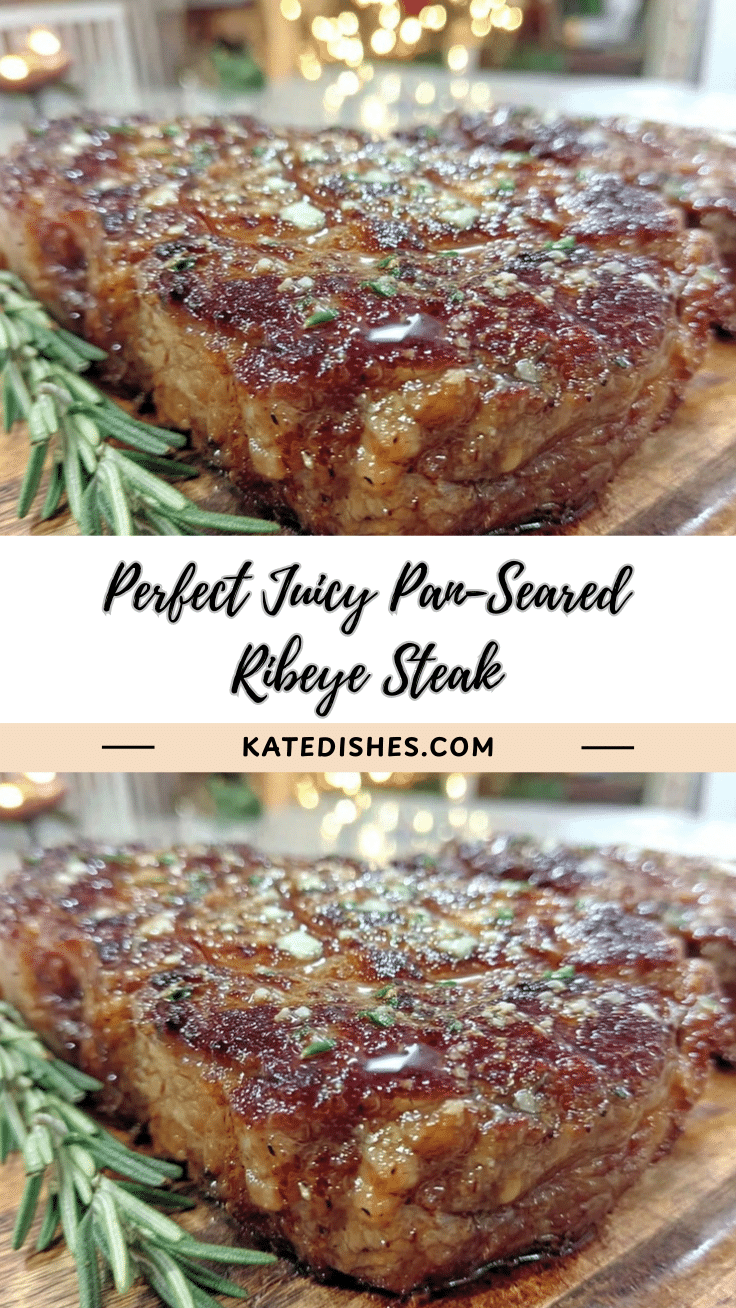
Perfect Pan-Seared Ribeye Steak
A quick and easy pan-seared ribeye steak recipe that delivers a juicy, tender crust with bold flavors, perfect for date nights or casual dinners.
- Prep Time: 20-30 minutes
- Cook Time: 10 minutes
- Total Time: 30-40 minutes
- Yield: 1 serving 1x
- Category: Main Course
- Cuisine: American
Ingredients
- 1 ribeye steak (12–16 oz / 340–450 g), about 1 to 1.5 inches thick, well-marbled
- Kosher salt or sea salt, for seasoning
- Freshly ground black pepper, coarse grind
- 1–2 tablespoons high smoke point oil (canola, grapeseed, or avocado oil)
- 2 tablespoons unsalted butter
- 2 large garlic cloves, smashed
- 2–3 sprigs fresh thyme or rosemary (optional)
Instructions
- Bring the steak to room temperature (about 20-30 minutes).
- Pat the steak dry with paper towels and season both sides liberally with kosher salt and freshly ground black pepper.
- Heat a cast iron skillet on medium-high heat for about 5 minutes until very hot but not burning.
- Add 1-2 tablespoons of high smoke point oil and swirl to coat the bottom of the skillet.
- Place the ribeye in the skillet and sear without moving for 3-4 minutes until a deep golden-brown crust forms.
- Flip the steak and cook the other side for another 3 minutes.
- Reduce heat to medium-low. Add butter, smashed garlic, and herbs to the pan. Tilt the pan and spoon the melted butter over the steak repeatedly to baste.
- Check doneness with an instant-read thermometer: 125°F (52°C) for rare, 135°F (57°C) for medium-rare, 145°F (63°C) for medium.
- Transfer the steak to a plate and tent loosely with foil. Rest for 5-10 minutes to allow juices to redistribute.
- Slice against the grain and pour any resting juices over the steak. Serve immediately.
Notes
Pat steak dry before seasoning to ensure a good sear. Do not overcrowd the pan. Use medium-low heat when basting with butter to avoid burning. Rest steak for 5-10 minutes before slicing to retain juices. For dairy-free option, substitute butter with ghee or olive oil.
Nutrition
- Serving Size: 1 ribeye steak (12-1
- Calories: 850
- Sodium: 600
- Fat: 70
- Saturated Fat: 30
- Protein: 65
Keywords: ribeye steak, pan-seared steak, steak recipe, easy steak, juicy steak, cast iron steak, butter basted steak